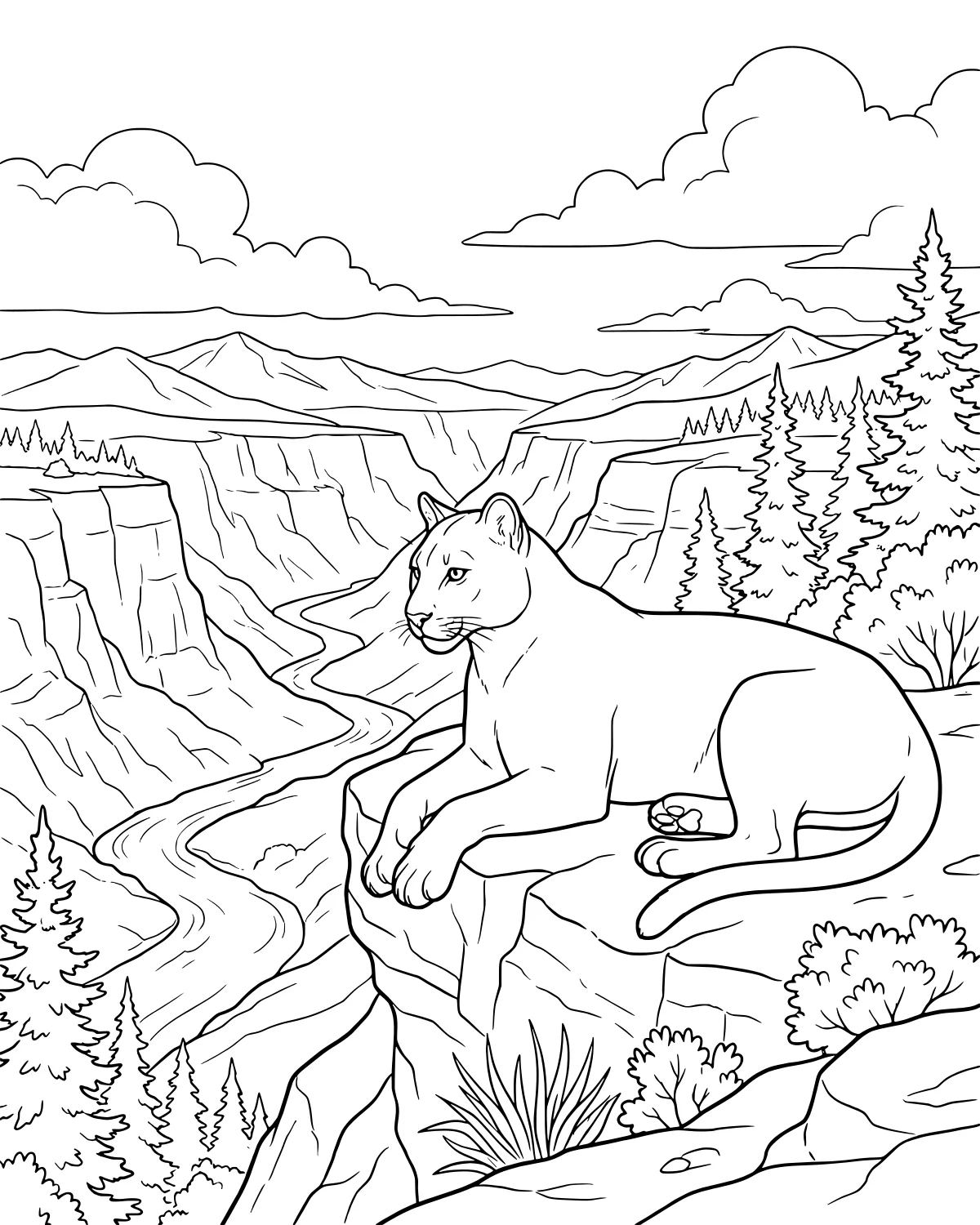
This scene captures a majestic cougar in a moment of quiet reflection, perched high atop a rugged cliff. From this vantage point, the powerful cat watches over a vast canyon where a winding river flows peacefully through the valley below. The background is filled with towering mountains and soft clouds that create a sense of scale and wonder for the great outdoors.
Anyone who loves wildlife and beautiful landscapes will find this page particularly relaxing. The combination of the resting cougar and the expansive wilderness provides plenty of space for creative expression. You can almost feel the cool mountain breeze and hear the distant sound of water as you bring this wild scene to life with your favorite colors.
Color Palette Ideas
What's In This Picture
In this illustration, the focal point is a large, peaceful cougar lounging comfortably on a shelf of rocks and grass. The cougar has a calm expression, looking out over a deep canyon that stretches toward the horizon. Below the cliff, a river snakes its way through the canyon floor, surrounded by small bushes and patches of vegetation.
Scattered across the middle ground are several pine trees that add texture to the rocky terrain. In the far distance, a range of mountains rises up to meet the sky, which is dotted with soft, fluffy clouds. The lines are clear and well-defined, making it easy to distinguish between the coarse fur of the cat, the sharp edges of the canyon walls, and the fluid movement of the water below.
Coloring Tips
For the cougar, you might try using tawny golds, sandy beiges, or warm browns to give it a natural look. A lighter cream color works perfectly for its underbelly and the area around its muzzle. To make the canyon look realistic, consider using a variety of earthy tones like burnt orange, deep red, and ochre to show the different layers of rock and soil.
The river looks wonderful in shades of sapphire or turquoise, especially if you leave a few white highlights to represent the sun reflecting off the water. For the mountains in the distance, using a lighter, slightly purplish-blue can help create a sense of atmospheric perspective, making them feel far away. Don't forget to use deep forest greens for the pine trees to contrast with the warm canyon colors.
Did You Know?
Did you know that cougars hold the Guinness World Record for the animal with the most names? Depending on where you live, you might call them mountain lions, pumas, panthers, or even catamounts. Even though they are large, they are actually more closely related to small house cats than to lions or tigers. They are also incredible jumpers and can leap up to 18 feet high in a single bound.
Try This!
After you finish coloring, you can try drawing a few more animals into the scene, like a tiny hawk soaring in the sky or a deer drinking from the river below. You could also write a short story about where this cougar is going next or what it sees from its high cliff. If you have some craft glue and sand, you could even stick a little sand to the canyon walls for a realistic texture.
Frequently Asked Questions
What colors should I use for a realistic cougar?
How can I make the river look like it's moving?
What is the best way to color the canyon walls?
Popular Collections
Animal Coloring Pages
Animals bring a special kind of life to any art project. Whether you love the quiet of a deep forest...
Spring Coloring Pages
As the frost melts away and the first green shoots poke through the soil, we welcome the vibrant ene...
Cute Coloring Pages
Finding something charming and sweet to color is one of the quickest ways to brighten a rainy aftern...


Kawaii Coloring Pages
Kawaii is more than just a word for cute; it is a whole aesthetic that celebrates the joy in the sma...
You Might Also Like
Whimsical Raven Under the Night Moon
Animals
Friendly Fox Baker in Paris
Animals
Zookeeper Feeding a Friendly Rhinoceros
Animals
Friendly Zoo Maze Adventure
Animals
Wise Pirate Owl Hunting for Treasure
Animals
Wise Owl Chef Kitchen
Animals
Owl Always Love You Night Scene
Animals
Safari Animals Riding in a Jeep
Animals