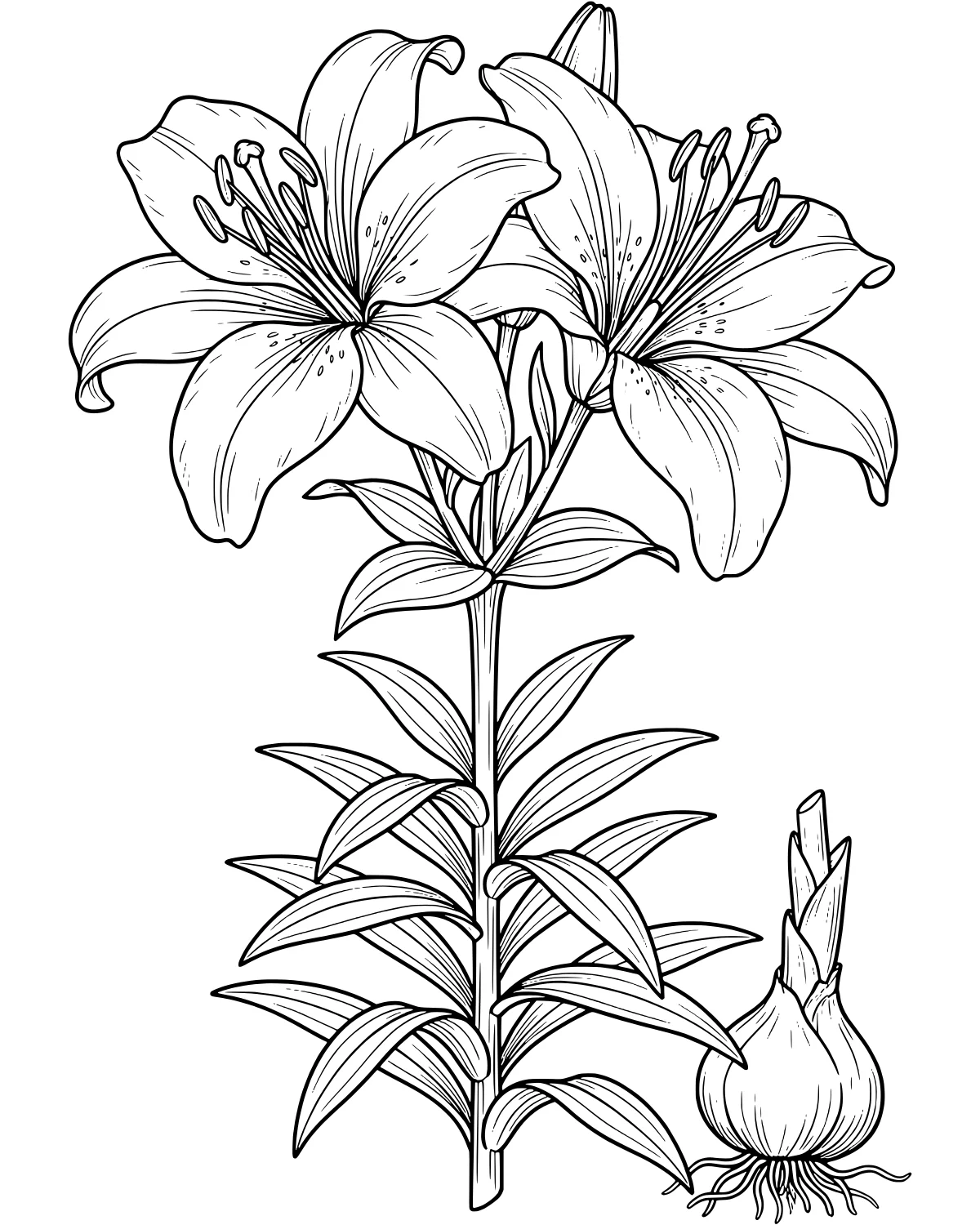
This beautiful botanical lily page offers a wonderful look at one of the garden's most elegant flowers. It captures the grace of a blooming lily along with the interesting parts that grow beneath the soil. You can focus on the delicate petals of the large flowers or the sturdy green stem that holds them high. This scene is perfect for anyone who loves spending time in nature and wants to bring a touch of the garden indoors.
The illustration highlights the lily flowers in full bloom, showing off their unique shape and long stamens. Next to the main stalk, you can see the lily bulb and its intricate roots, which helps show how these flowers start their journey in the earth. It is a peaceful way to spend an afternoon learning about how plants grow while experimenting with your favorite colors.
Color Palette Ideas
What's In This Picture
As you look at this page, you will find two large lily flowers at the very top of a tall lily stem. One flower is opened wide, while the other shows off its curved petals from a side view. Near the top, there is also a small lily bud waiting for its turn to bloom. The stem is covered in many long, pointed lily leaves that grow in a spiral pattern all the way down.
To the side of the main plant, the artist has included a detailed look at the lily bulb. This is the part of the plant that stays underground during the winter. You can see the layers of the bulb and the many thin, twisting roots reaching out from the bottom. Every part of the plant is represented here, from the very tips of the petals to the tiny root hairs in the dirt.
Coloring Tips
Lilies come in many different shades, so you have plenty of choices for these petals. You might choose a bright white with tiny pink spots for a classic stargazer look, or perhaps a bold orange or yellow. Using a lighter shade on the edges of the petals and a darker color toward the center can give the flowers more depth. For the long stamens in the middle, a touch of brown or dark orange works well to make them stand out.
The leaves and stem look best in various shades of green. You can use a deep forest green for the older leaves at the bottom and a lighter lime green for the new growth near the top. When coloring the bulb and roots, try using earthy tones like tan, beige, or light brown. Using a colored pencil to softly shade around the roots can make them look like they are resting in the soil.
Did You Know?
Did you know that lilies are very special because they grow from bulbs? These bulbs act like a tiny suitcase, storing all the food and energy the plant needs to survive through the cold winter. When spring arrives, the bulb wakes up and uses that stored energy to push the stem up through the dirt. Some lilies are also very famous for their strong, sweet scent that can fill an entire room.
Try This!
After finishing this page, you could try to find a real lily in a garden or a flower shop to see how the petals feel. You might also want to try drawing your own garden scene around the bulb to show what it looks like underground. Another fun idea is to label the different parts of the plant, like the roots, bulb, and stem, to turn your art into a science project.
Frequently Asked Questions
What type of lily is shown in this coloring page?
How should I color the bulb and roots?
Can I use watercolors on this page?
Popular Collections


Animal Coloring Pages
Animals bring a special kind of life to any art project. Whether you love the quiet of a deep forest...

Cute Coloring Pages
Finding something charming and sweet to color is one of the quickest ways to brighten a rainy aftern...



Kawaii Coloring Pages
Kawaii is more than just a word for cute; it is a whole aesthetic that celebrates the joy in the sma...


Funny Coloring Pages
Laughter is a wonderful part of childhood, and our collection of Funny Coloring Pages is designed to...
You Might Also Like
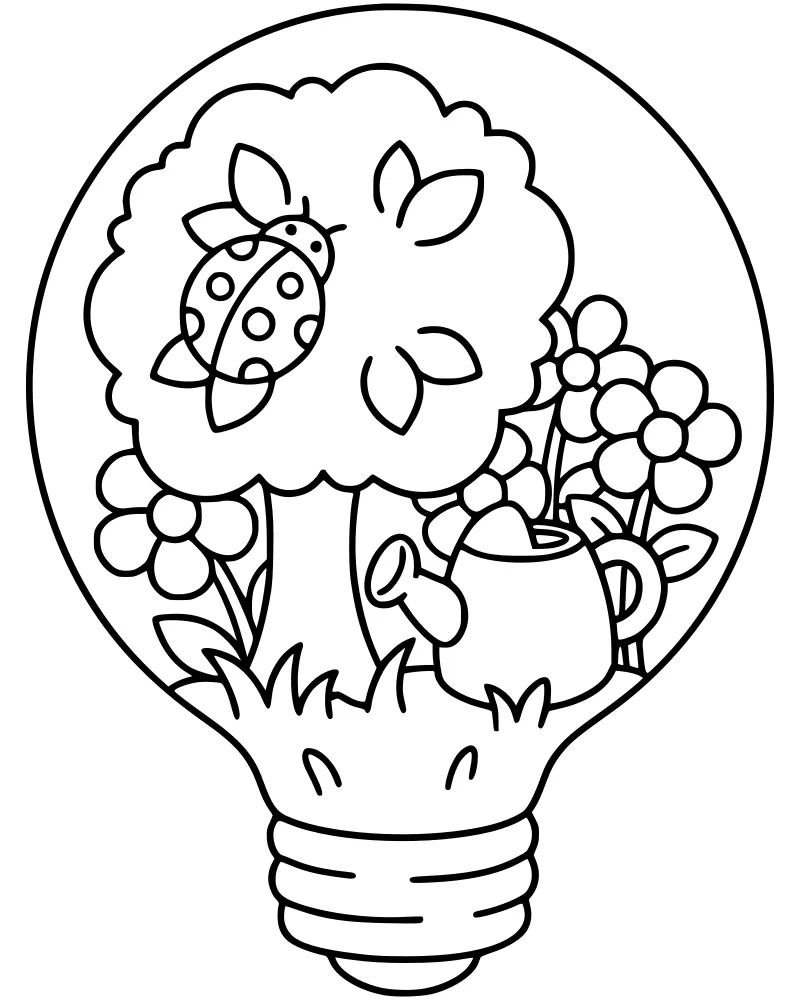
Whimsical Garden Inside a Light Bulb
Nature & Outdoors
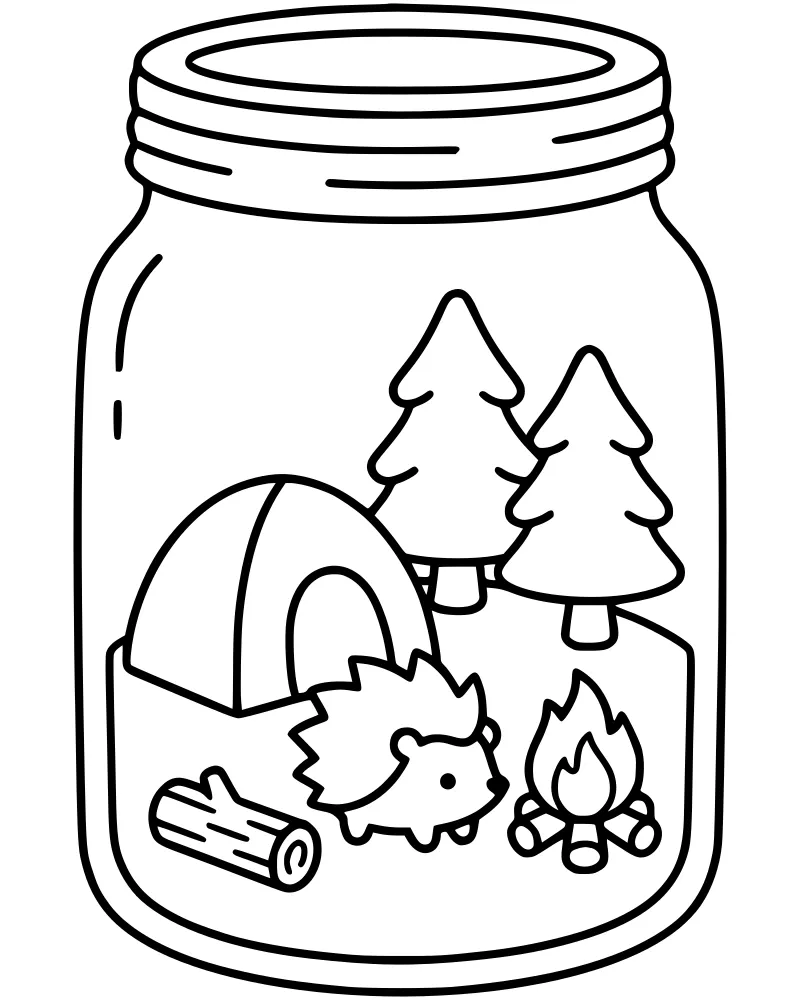
Cozy Hedgehog Camping in a Jar
Nature & Outdoors
Whimsical Garden Lantern with Butterfly
Nature & Outdoors

Desert Sun Hourglass Adventure
Nature & Outdoors
Hummingbird and Tropical Hibiscus Bloom
Nature & Outdoors
Whimsical Autumn Scarecrow and Rainbow Scene
Nature & Outdoors
Majestic Rainbow Canyon and River
Nature & Outdoors

Sunny Beach Day and Sandcastle Fun
Nature & Outdoors