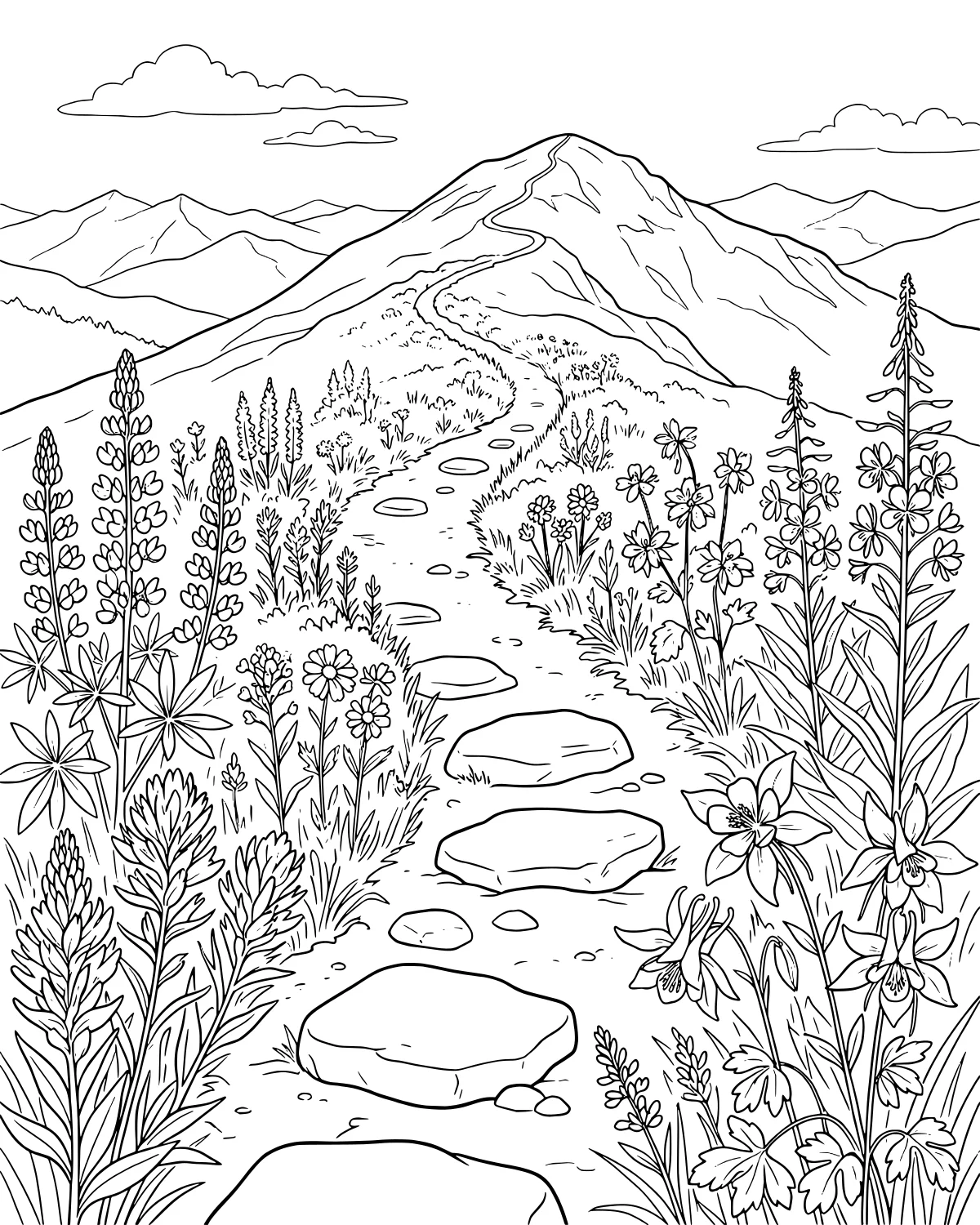
Imagine taking a quiet walk up a sun-drenched hill. This scene captures a winding mountain path made of sturdy stepping stones that guide you toward a distant summit. Along the way, you are surrounded by the beauty of nature, from the soft swaying grass to the vibrant wildflowers peeking out from the greenery. It is a peaceful moment captured in lines, waiting for some color to bring the fresh mountain air to life. This page is perfect for anyone who loves the outdoors and the feeling of a new adventure waiting just around the bend.
Color Palette Ideas
What's In This Picture
As you look at this page, your eyes follow the trail of large, flat stones that curve gently up the grassy slope. In the foreground, you will find detailed clusters of lupine and delicate columbine flowers, each with unique petals and stems that offer a wonderful chance to use different shades. The grass and foliage fill the spaces between the rocks, creating a lush texture that leads your gaze toward the majestic mountains in the background. High above the peaks, soft clouds drift across the sky, adding a sense of height and space to the entire landscape. Every element, from the tiny leaves to the massive rock faces, tells a story of a beautiful day in the high country.
Coloring Tips
To make the flowers stand out, you might try using bright purples and pinks for the lupines and perhaps a bold red or orange for the columbines. The stepping stones look great with a mix of grays, tans, and even a little bit of light brown to give them a natural, weathered appearance. For the distant mountains, using lighter, softer blues or purples can help create a sense of distance, making the peaks look like they are far away under the hazy sky. You can use different shades of green for the grass, making it darker near the flowers and lighter where the sun might be hitting the slope. If you want to add a special touch, try a very light yellow or orange in the sky to suggest a warm morning glow behind the clouds.
Did You Know?
Did you know that lupines are part of the pea family? These tall, colorful flowers actually help the soil by adding nitrogen, which makes the ground healthier for other plants to grow. They are like nature’s little gardeners. Columbine flowers are also special because their unique shape looks a bit like a cluster of five birds, which is how they got their name from the Latin word for dove.
Try This!
After you finish coloring the scenery, you could draw a small backpack resting on one of the stones or a tiny chipmunk peeking out from behind the flowers. You might also try to map out where the path goes after it disappears behind the hill by drawing your own secret destination on a separate piece of paper.
Frequently Asked Questions
What colors should I use for the mountain flowers?
How do I make the mountains look far away?
What is the best way to color the grass?
Popular Collections
Animal Coloring Pages
Animals bring a special kind of life to any art project. Whether you love the quiet of a deep forest...
Spring Coloring Pages
As the frost melts away and the first green shoots poke through the soil, we welcome the vibrant ene...
Cute Coloring Pages
Finding something charming and sweet to color is one of the quickest ways to brighten a rainy aftern...


Kawaii Coloring Pages
Kawaii is more than just a word for cute; it is a whole aesthetic that celebrates the joy in the sma...
You Might Also Like
Whimsical Garden Inside a Light Bulb
Nature & Outdoors
Cozy Hedgehog Camping in a Jar
Nature & Outdoors

Whimsical Garden Lantern with Butterfly
Nature & Outdoors

Desert Sun Hourglass Adventure
Nature & Outdoors
Hummingbird and Tropical Hibiscus Bloom
Nature & Outdoors
Sunny Beach Day and Sandcastle Fun
Nature & Outdoors
Whimsical Autumn Scarecrow and Rainbow Scene
Nature & Outdoors
Majestic Rainbow Canyon and River
Nature & Outdoors