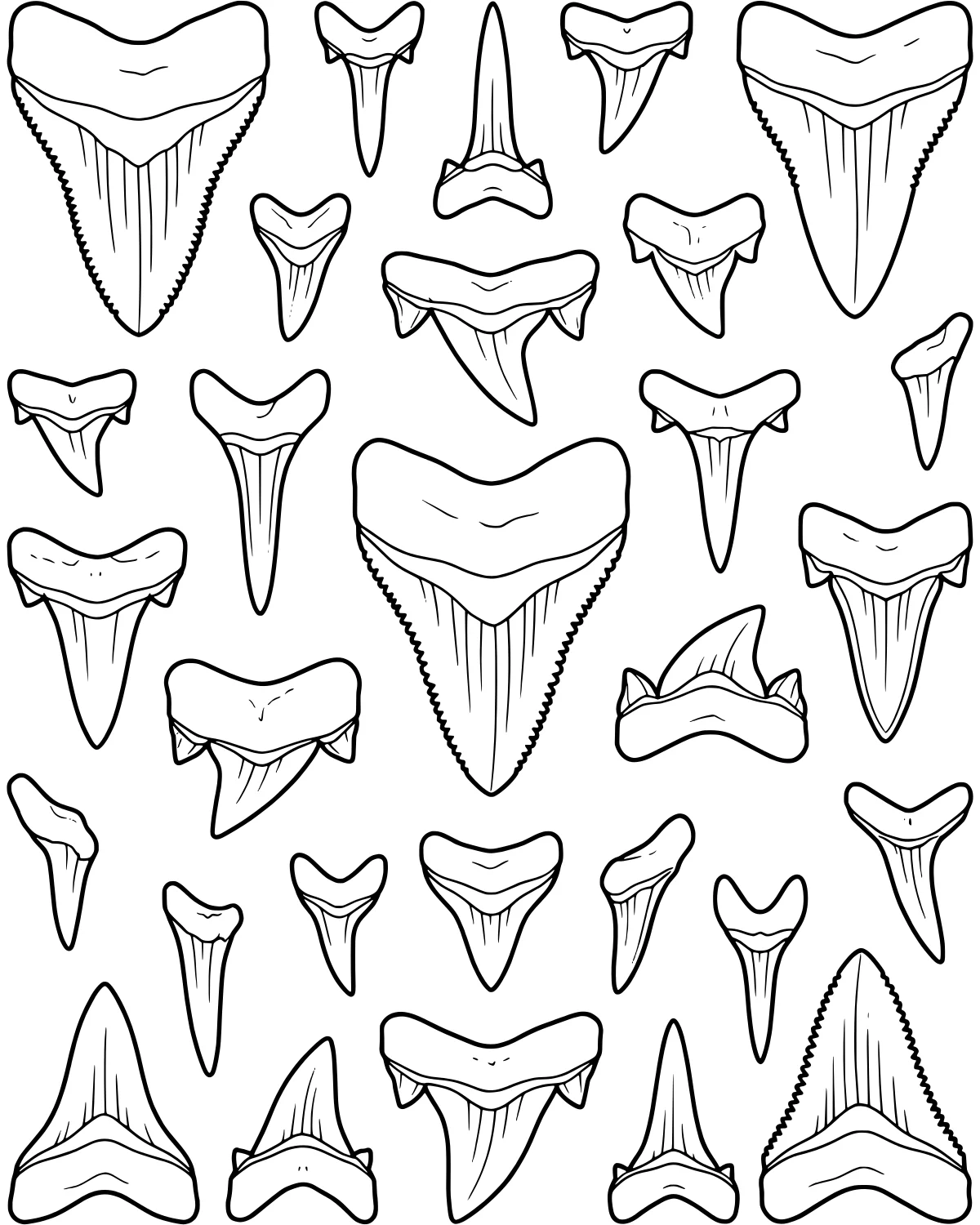
This page brings together a fascinating collection of shark teeth from different species and eras. You can explore the sharp, serrated edges of a Great White shark tooth alongside the massive, ancient remains of a Megalodon tooth. It is a perfect way to learn about the ocean's most powerful predators while enjoying a relaxing coloring session. Each tooth has a unique shape and history, making this an educational adventure for young explorers who love the mysteries of the deep sea.
Working on these natural shapes provides a great opportunity to look closely at the different ways nature designs tools for survival. Whether you prefer the giant fossils of the past or the sleek teeth of modern hunters, this scene offers plenty of variety to keep you engaged.
Color Palette Ideas
What's In This Picture
On this page, you will find a variety of specimens including the iconic Megalodon tooth, which sits as a focal point due to its impressive size. Notice the triangular shapes of the Great White shark tooth and the curved, hooked appearance of the Tiger shark tooth. The collection also includes the distinct forms of Bull shark and Hammerhead shark teeth, each perfectly adapted for hunting different types of sea life.
Some teeth feature textures that suggest they are fossilized, with weathered roots and mineralized surfaces that have survived for millions of years. The scattered arrangement allows you to focus on one tooth at a time, noticing the fine serrations on the edges and the thick, sturdy roots at the top. The clean white background ensures that every detail of these prehistoric and modern treasures is easy to see and color.
Coloring Tips
Since these are fossils and natural specimens, you can use a wide range of earthy tones. For fossilized teeth, try using shades like tan, charcoal, and sandy brown to give them an aged look. Natural minerals in the ground often turn fossils into deep blacks or rusty oranges over millions of years. Modern teeth often appear pearly white, but you can add depth by using light grays or soft blues in the shadows to show their three-dimensional shape.
To make the serrated edges pop, use a finer tip marker or a sharpened colored pencil to trace the jagged outlines. Adding a light wash of color to the background, like a soft beige or a pale blue, can help the individual teeth stand out as if they are displayed in a museum case or found on a sandy beach. Experimenting with blending different browns and grays on the roots will give them a realistic, stony texture.
Did You Know?
Did you know that sharks never run out of teeth? Most sharks have several rows of teeth and can lose thousands of them throughout their lives. When one tooth falls out, another one from the row behind it moves forward to take its place like a conveyor belt. This is why it is so common to find them washed up on beaches or buried in the earth as fossils.
Try This!
After you finish coloring, try to label each tooth based on its shape and size using a reference book or the internet. You could also research which sharks are still swimming in the ocean today and which ones, like the giant Megalodon, are extinct. This makes for a great science project or a fun game of identification for a young marine biologist.
Frequently Asked Questions
What is the biggest tooth on the page?
Why do some teeth look different?
What colors should I use for fossils?
Popular Collections

Animal Coloring Pages
Animals bring a special kind of life to any art project. Whether you love the quiet of a deep forest...

Spring Coloring Pages
As the frost melts away and the first green shoots poke through the soil, we welcome the vibrant ene...

Cute Coloring Pages
Finding something charming and sweet to color is one of the quickest ways to brighten a rainy aftern...



Kawaii Coloring Pages
Kawaii is more than just a word for cute; it is a whole aesthetic that celebrates the joy in the sma...
You Might Also Like
Miniature Lighthouse in a Bottle
Ocean & Sea Life

Clownfish Swimming in a Glass Fishbowl
Ocean & Sea Life
Penguin on an Icy Ocean Adventure
Ocean & Sea Life

Surfing Penguin Catching Ocean Waves
Ocean & Sea Life
Caring Penguin Parent and Fluffy Chick
Ocean & Sea Life
Playful Sea Turtle and Octopus Friends
Ocean & Sea Life
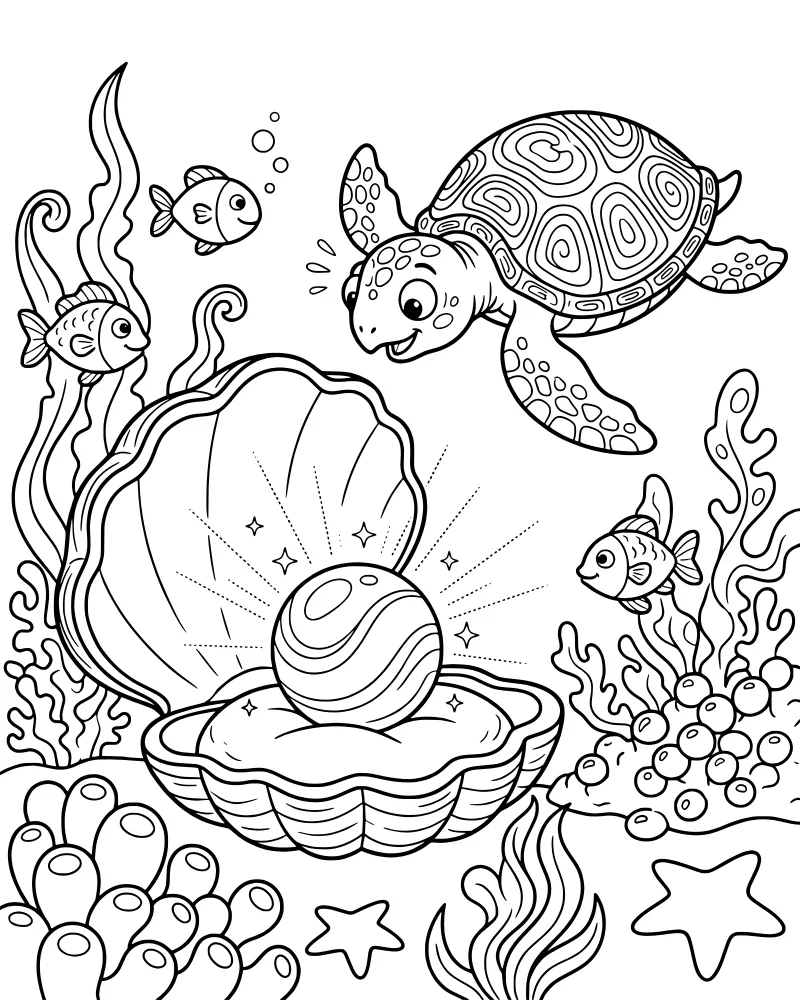
Sea Turtle Finding Underwater Pearl
Ocean & Sea Life
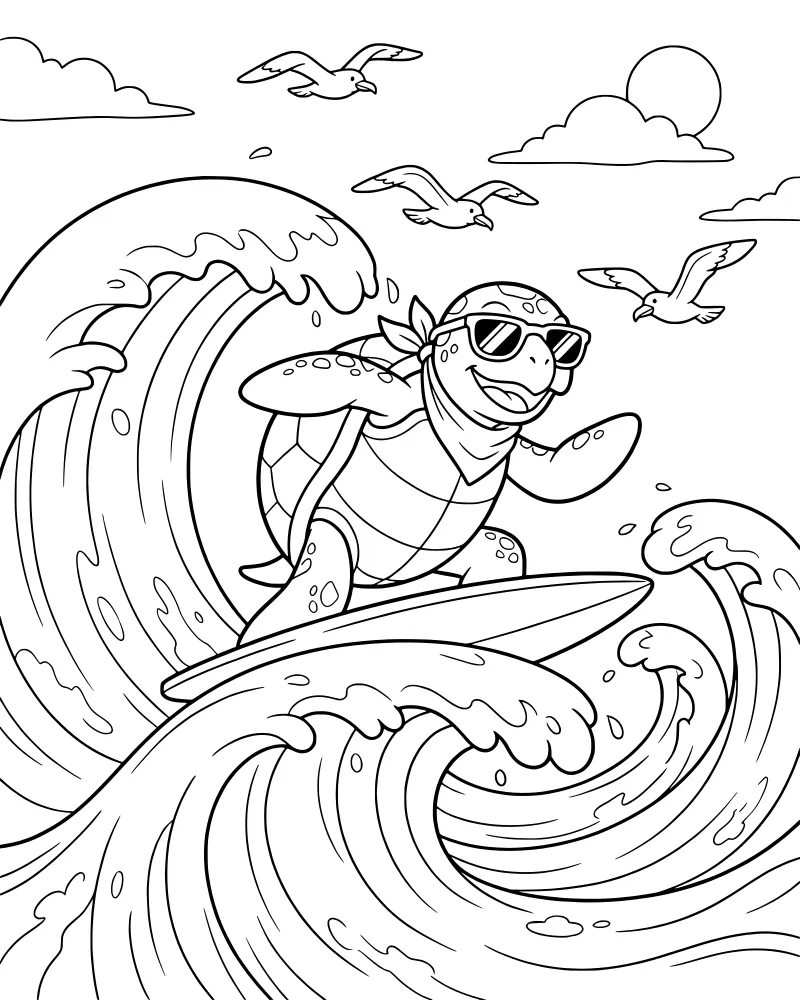
Surfing Sea Turtle Catching Waves
Ocean & Sea Life