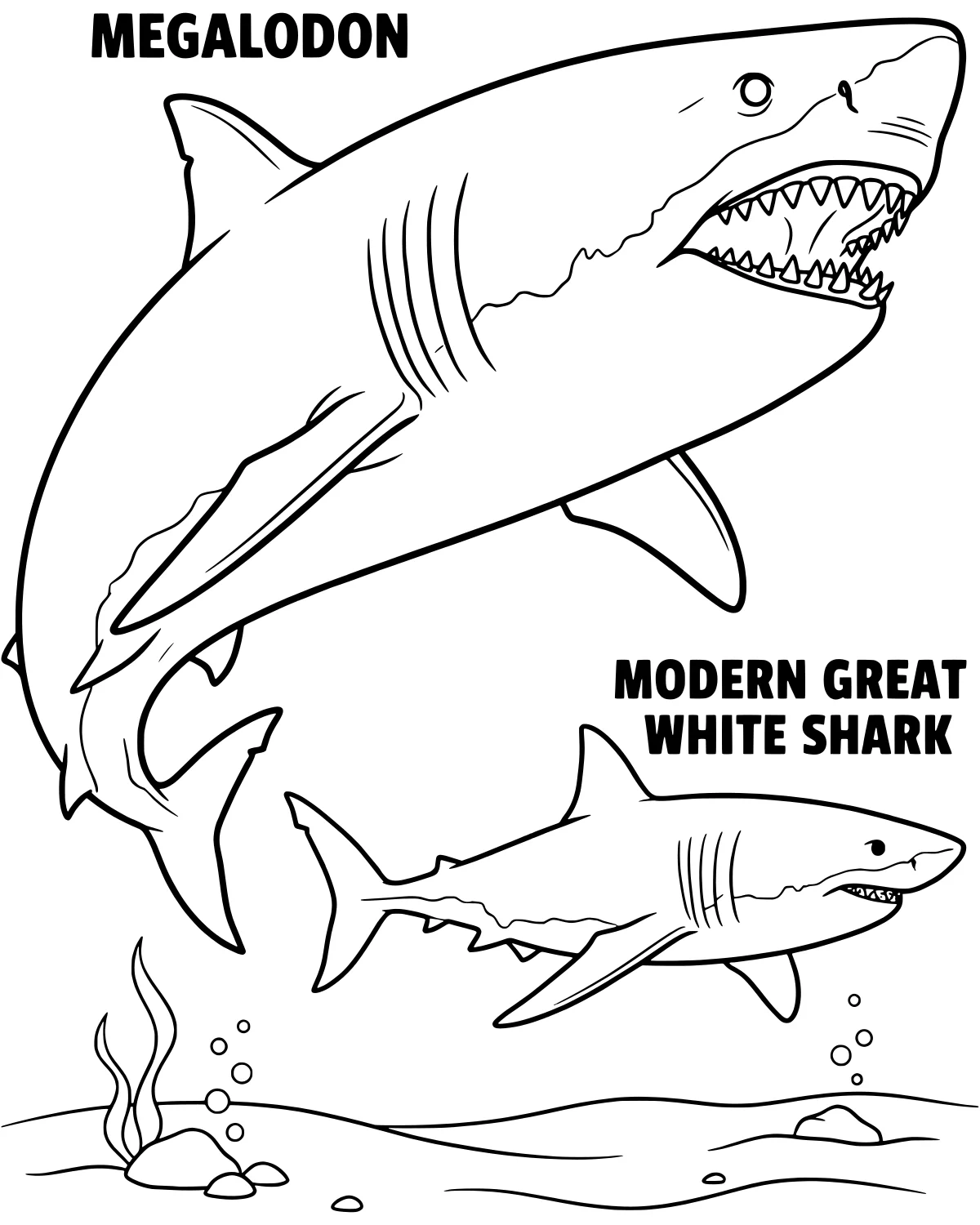
Imagine swimming in the ancient ocean alongside the largest predator to ever live. This page highlights the incredible size difference between the legendary Megalodon shark and its famous modern relative, the Modern Great White Shark. It provides a fascinating look at how creatures have changed over millions of years. As you color, you can think about the vast mysteries of the deep sea and the powerful animals that once ruled the waves. The scene captures a rare moment of comparison, showing the massive scale of prehistoric life against the ocean life we know today.
Color Palette Ideas
What's In This Picture
In the center of the page, the massive Megalodon shark glides through the water, showing off its rows of sharp Megalodon teeth. Right next to it, the Modern Great White Shark looks quite small by comparison, even though it is a giant in our current world. Below the sharks, the ocean floor is detailed with sturdy rocks and swaying seaweed that reaches upward toward the surface. Tiny bubbles drift through the water, adding a sense of movement to the entire underwater landscape. Every element helps illustrate the sheer power and presence of these two magnificent predators as they navigate their aquatic home. You can see the details of the fins and the sleek shapes of both sharks as they swim together.
Coloring Tips
To make the sharks look realistic, try using different shades of grey and blue. You can color the top of the sharks a darker slate grey while keeping their bellies a lighter, soft grey or even a pale blue. This technique, called countershading, is how real sharks hide in the water. For the seaweed, use a mix of forest green and lime green to show how the light hits the leaves. The rocks on the ocean floor look great in earthy tones like sandy brown or deep charcoal. If you want to add a special touch, use a very light sky blue for the bubbles to make them pop against the darker water. You might even use a light cream color for the Megalodon teeth to make them look like ancient fossils.
Did You Know?
Did you know that a single Megalodon tooth could be over seven inches long? That is about the size of a large tablet or a small dinner plate! While the Modern Great White is impressive, the Megalodon was three times longer and much heavier, making it one of the most powerful predators in Earth's history.
Try This!
After you finish coloring, try to find a ruler and see if you can draw a tiny human figure next to the sharks to show just how big they really are. You could also draw some small tropical fish or a treasure chest hidden among the rocks and seaweed to create your own underwater story about a deep-sea discovery.
Frequently Asked Questions
How big was a Megalodon compared to a Great White?
Are Megalodon sharks still swimming in the ocean?
What color should I make the Megalodon's teeth?
Popular Collections
Animal Coloring Pages
Animals bring a special kind of life to any art project. Whether you love the quiet of a deep forest...

Spring Coloring Pages
As the frost melts away and the first green shoots poke through the soil, we welcome the vibrant ene...

Cute Coloring Pages
Finding something charming and sweet to color is one of the quickest ways to brighten a rainy aftern...



Kawaii Coloring Pages
Kawaii is more than just a word for cute; it is a whole aesthetic that celebrates the joy in the sma...
You Might Also Like
Whimsical Ship in a Bottle
Ocean & Sea Life
Friendly Penguin and Puffin Sharing Fish
Ocean & Sea Life

Fishing Penguin in the Arctic
Ocean & Sea Life
Four Happy Sea Turtles Swimming in Waves
Ocean & Sea Life
Friendly Cartoon Shark Under the Sea
Ocean & Sea Life
Shark Fin and Midnight Moon
Ocean & Sea Life

Happy Birthday Shark with Cupcake
Ocean & Sea Life
Shark and Surfer High Five
Ocean & Sea Life