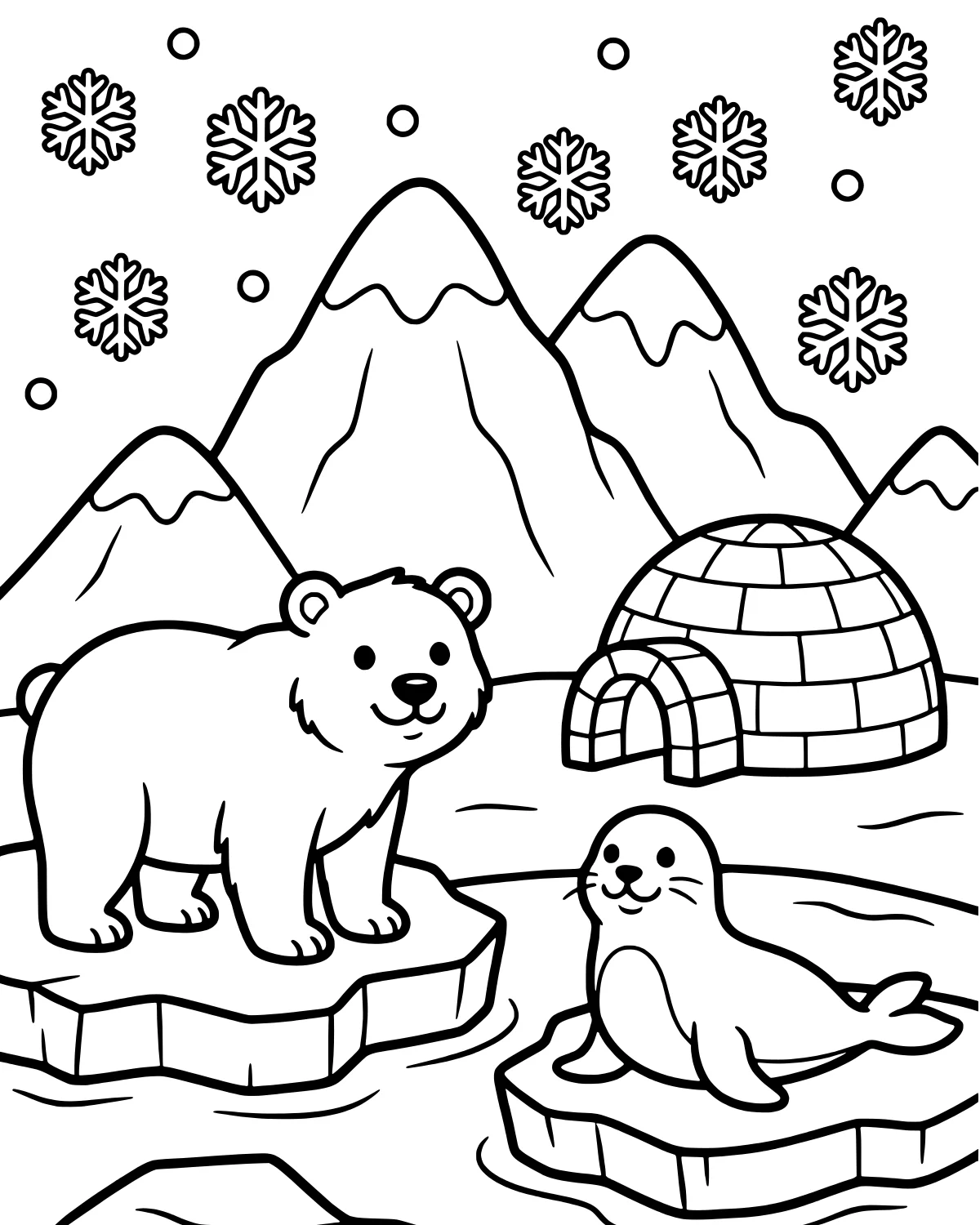
This Arctic scene brings together two of the most famous neighbors of the North Pole for a chilly adventure. A polar bear and a seal are enjoying a peaceful day among the floating icebergs in the cold northern waters. The cartoon style makes these chilly friends look incredibly friendly and welcoming for artists of all skill levels. You can almost feel the crisp air as you look at the towering mountains and the gently falling snow. It is a wonderful way to explore a part of the world that is filled with ice and wonder.
There is so much to see in this winter landscape, from the cozy home on the shore to the animals resting on the ice. The balance of large characters and detailed background elements provides a perfect canvas for anyone who loves nature. Whether you prefer bright colors or soft tones, this page offers plenty of space to experiment with your favorite shades.
Color Palette Ideas
What's In This Picture
In the center of the page, a large polar bear stands proudly on a floating block of ice, looking out over the landscape. Nearby, a happy seal rests on its own smaller iceberg, looking over at its friend with a smile. Behind them sits a classic igloo with its rounded dome and small entrance, tucked away safely near the base of some tall, jagged mountains that reach up toward the sky.
The water surrounding the icebergs shows gentle ripples, suggesting a calm day at sea despite the cold. Large, stylized snowflakes fill the sky, adding a magical touch to the entire landscape. Every element, from the texture of the snow to the smooth surface of the icebergs, is outlined with clear lines that make it easy to stay within the boundaries while you color.
Coloring Tips
Since most of the subjects like the polar bear and the igloo are naturally white, you can use light shades of blue, lavender, or mint green to add shadows and depth. This technique makes the white areas look more like real ice and snow rather than just empty paper. For the water, try using a darker blue near the bottom and gradually fading to a lighter teal near the icebergs to create a sense of depth and movement.
The seal looks great in shades of grey or even a soft brown to provide a nice contrast with the icy surroundings. You can also add some glitter or metallic pens to the snowflakes to make them sparkle like real ice crystals. If you want to make the mountains stand out, try using a mix of dark purple and grey for the rocky parts, leaving the peaks white to represent the heavy snow caps.
Did You Know?
Even though they live in the freezing cold, polar bears actually have black skin under all that white fur. Their fur is actually translucent and reflects light, which is why it looks white to our eyes. This special coat helps them blend into the snow while their black skin absorbs heat from the sun to keep them warm during the long Arctic winters.
Try This!
After you finish coloring the animals, try counting all the snowflakes on the page to practice your numbers. You could also draw a few more Arctic creatures in the background, like a tiny puffin sitting on the igloo or a whale tail splashing in the distance. Another fun idea is to give the polar bear and the seal names and write a short story about their snowy friendship on the back of the page.
Frequently Asked Questions
What colors should I use for the polar bear?
Is this coloring page suitable for toddlers?
How can I make the snow look more realistic?
Popular Collections
Animal Coloring Pages
Animals bring a special kind of life to any art project. Whether you love the quiet of a deep forest...
Spring Coloring Pages
As the frost melts away and the first green shoots poke through the soil, we welcome the vibrant ene...
Cute Coloring Pages
Finding something charming and sweet to color is one of the quickest ways to brighten a rainy aftern...

Kawaii Coloring Pages
Kawaii is more than just a word for cute; it is a whole aesthetic that celebrates the joy in the sma...
You Might Also Like
Curious Fox Stargazing with Telescope
Animals
Happy Fluffy Sheep in Meadow
Animals
Joyful Foxes Dancing Around a Maypole
Animals
Playful Origami Foxes on Geometric Blocks
Animals
Whimsical Animal Friends Crossing a Rainbow
Animals
Clever Fox and Stork Dinner Scene
Animals
Happy Zebra in Savanna Sunlight
Animals
Modern Geometric Fox Head
Animals