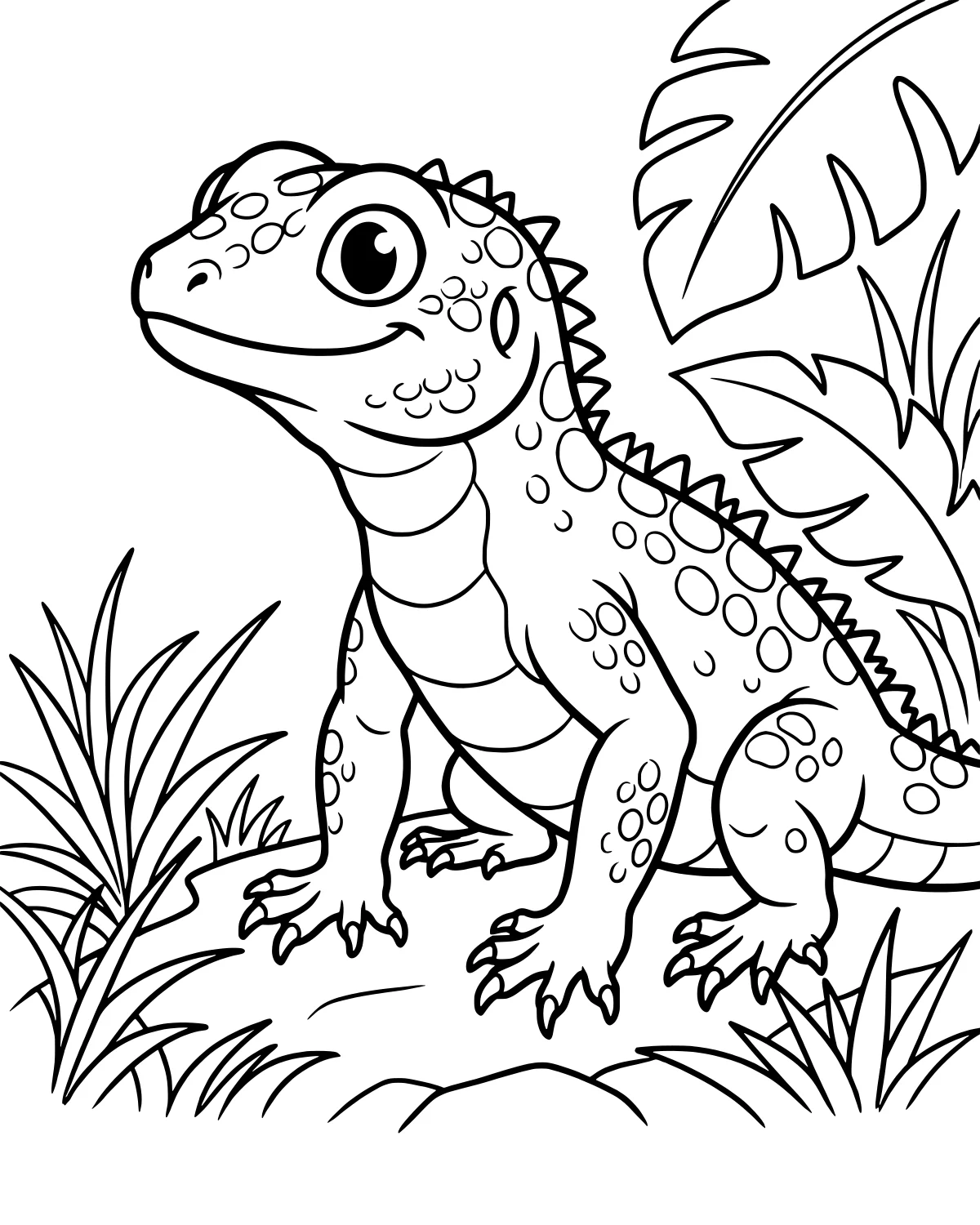
Meet our friendly iguana as he takes a break on his favorite sun-warmed stone. This cheerful reptile is waiting for someone to add a splash of color to his tropical home. With his big, curious eyes and a gentle smile, he looks like he's ready to make a new friend while enjoying the fresh jungle air.
The scene is filled with lush tropical leaves and tall blades of grass that frame our main character perfectly. You can see the intricate details of his scales and spots, along with the row of soft spikes running down his back. It is a wonderful way to explore nature and reptiles through art.
Color Palette Ideas
What's In This Picture
This illustration shows a happy iguana perched comfortably atop a large, smooth rock. His body is covered in small spots and scales that provide a great opportunity for detailed coloring. Look closely at his back to find a series of spikes that give him his classic prehistoric look.
Surrounding the rock, you will find several large tropical leaves with distinct veins and long blades of grass peeking up from the ground. The iguana's face is the main focal point, with wide eyes and a friendly expression that makes him very approachable for younger artists. Every part of this jungle scene offers something interesting to fill with color.
Coloring Tips
For the iguana, you might choose classic shades of emerald green or lime, but don't feel limited to just one color. Using a lighter shade for his belly and a darker one for his spikes can create a nice sense of depth. You can even use different colors for each of his spots to make him look extra vibrant and unique.
The tropical leaves look great in various shades of forest green or even teal. For the rock, try mixing greys, browns, or even a hint of purple to mimic natural stone textures. Using colored pencils for the smaller scales and crayons or markers for the larger background elements works well to balance the moderate level of detail.
Did You Know?
Did you know that some iguanas can fall from trees as high as 40 feet and land on the ground without getting hurt? They use their strong claws to climb back up quickly. They are also excellent swimmers and can stay underwater for nearly half an hour!
Try This!
After coloring, try to find out what kind of fruits and vegetables iguanas like to eat and draw some of those treats around the rock. You could also give your new lizard friend a name and write a short story about his adventures in the rainforest.
Frequently Asked Questions
What colors are real iguanas?
What do the spikes on the back do?
Can I use markers on this page?
Popular Collections
Spring Coloring Pages
As the frost melts away and the first green shoots poke through the soil, we welcome the vibrant ene...

Cute Coloring Pages
Finding something charming and sweet to color is one of the quickest ways to brighten a rainy aftern...



Kawaii Coloring Pages
Kawaii is more than just a word for cute; it is a whole aesthetic that celebrates the joy in the sma...


Funny Coloring Pages
Laughter is a wonderful part of childhood, and our collection of Funny Coloring Pages is designed to...
You Might Also Like
Curious Fox Stargazing with Telescope
Animals
Joyful Foxes Dancing Around a Maypole
Animals

Whimsical Animal Friends Crossing a Rainbow
Animals
Playful Tabby Cat in a Basket
Animals
Happy Zebra in Savanna Sunlight
Animals
Happy Fluffy Sheep in Meadow
Animals

Fox Playing Banjo on a Moonlit Dock
Animals
Playful Origami Foxes on Geometric Blocks
Animals