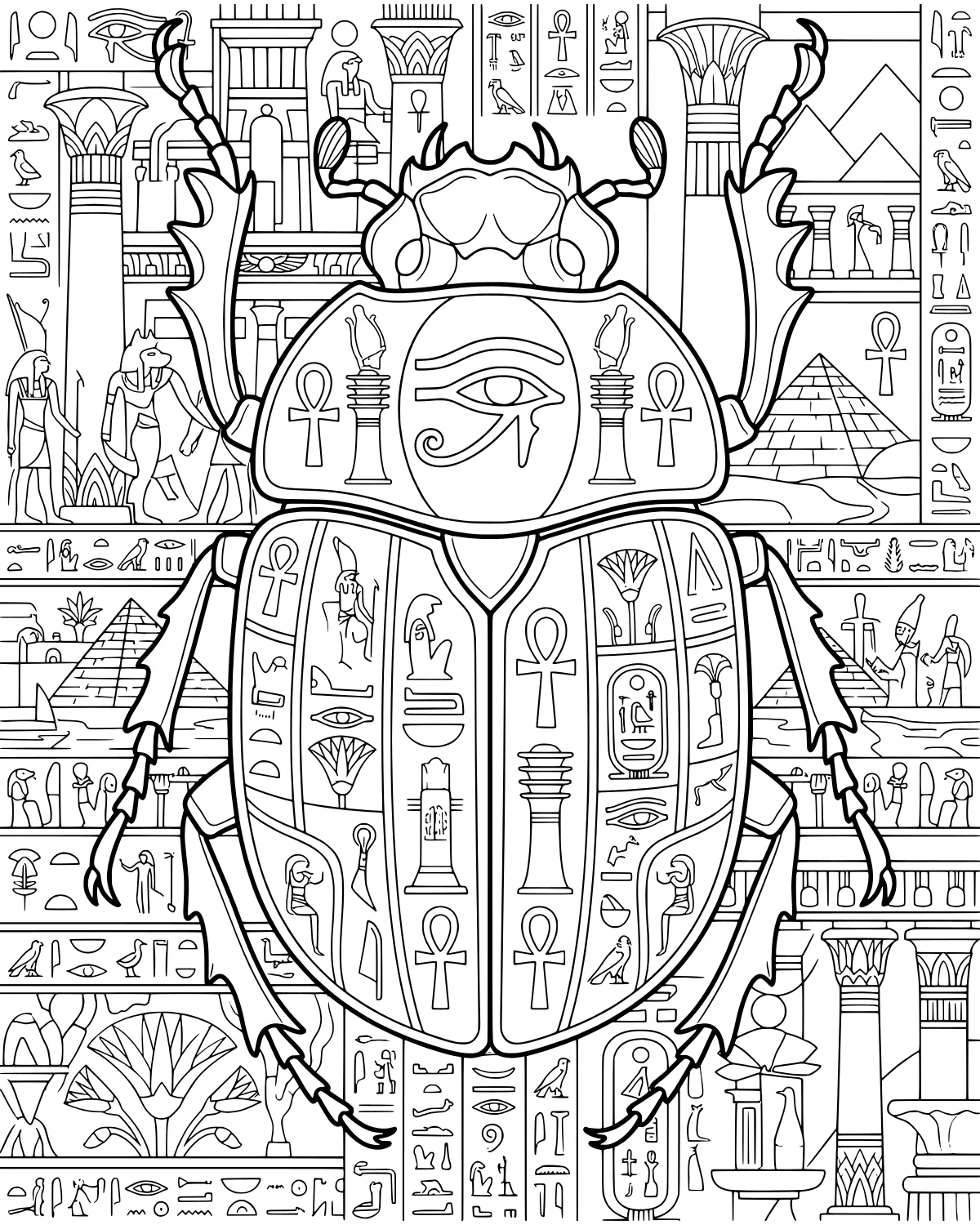
Travel back in time to the land of the pharaohs with this stunning Ancient Egyptian scene. At the heart of the image sits a magnificent scarab beetle, a symbol of rebirth and protection, adorned with the powerful Eye of Horus. Surrounded by the iconic pyramids of Giza and majestic temple columns, this page captures the mystery and grandeur of an ancient civilization. Whether you love history or are fascinated by the gods of old, this intricate design offers a window into a world of golden sands and timeless legends.
Color Palette Ideas
What's In This Picture
This page is filled with symbolic imagery and historical details. The large scarab beetle dominates the center, featuring a sun disk and the Eye of Horus etched into its wings. In the background, you will find the sharp peaks of the pyramids and tall Egyptian columns decorated with lotus flowers and papyrus plants. Look closely to find the god Anubis and noble pharaohs standing among rows of authentic-looking hieroglyphs. Small ankh symbols and soaring birds fill the spaces between the larger figures, creating a dense and rewarding landscape to explore. Every corner of the page tells a story through these ancient icons, from the delicate petals of the lotus to the rigid posture of the Egyptian figures.
Coloring Tips
Because this page is so detailed, using fine-tipped markers or sharpened colored pencils will help you stay within the intricate hieroglyphs. You might choose a royal palette of gold, turquoise, and lapis lazuli to bring the pharaohs and gods to life. For the scarab beetle, try using metallic gel pens or iridescent shades to mimic the shimmering shell of a real jewel beetle. The pyramids look wonderful in warm sandy tones like ochre and terracotta, while the lotus flowers can provide a pop of soft pink or blue. If you want to create a sense of depth, use lighter shades for the distant pyramids and bolder, more saturated colors for the elements in the foreground like the columns and the main scarab.
Did You Know?
Did you know that the ancient Egyptians viewed the scarab beetle as a symbol of the sun moving across the sky? They believed the god Khepri rolled the sun through the heavens just like a beetle rolls a ball of earth. Hieroglyphs were also considered the words of the gods and were used for over 3,000 years.
Try This!
After you finish coloring, try to decode some of the hieroglyphs or draw your own secret message using Egyptian symbols at the bottom of the page. You could also look up the stories of Anubis or the Eye of Horus to learn more about why these figures were so important to the people who lived near the Nile.
Frequently Asked Questions
What does the Eye of Horus represent on the scarab?
Are these real Egyptian hieroglyphs?
Which god is shown in the scene?
Popular Collections
Animal Coloring Pages
Animals bring a special kind of life to any art project. Whether you love the quiet of a deep forest...
Spring Coloring Pages
As the frost melts away and the first green shoots poke through the soil, we welcome the vibrant ene...
Cute Coloring Pages
Finding something charming and sweet to color is one of the quickest ways to brighten a rainy aftern...

Kawaii Coloring Pages
Kawaii is more than just a word for cute; it is a whole aesthetic that celebrates the joy in the sma...
You Might Also Like
Mechanical Steampunk Dragon and Industrial Gears
Fantasy & Mythology
Tiny Forest House in a Glass Jar
Fantasy & Mythology
Whimsical Frog Pond in a Teacup
Fantasy & Mythology
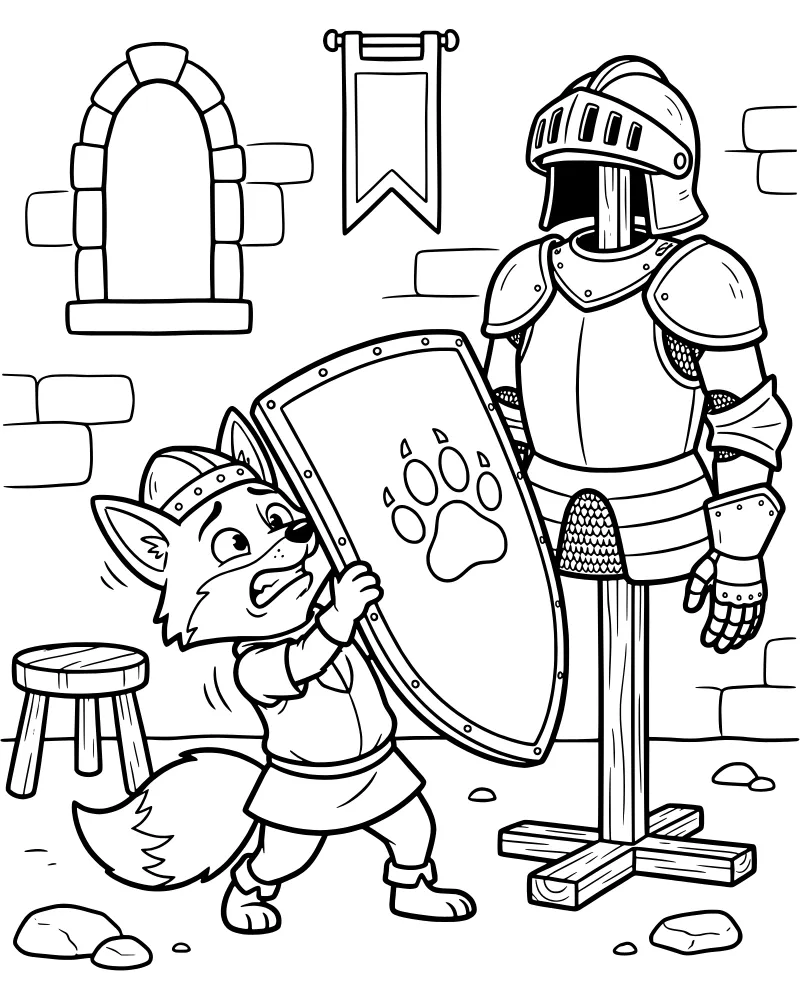
Little Fox Knight Lifting Heavy Shield
Fantasy & Mythology
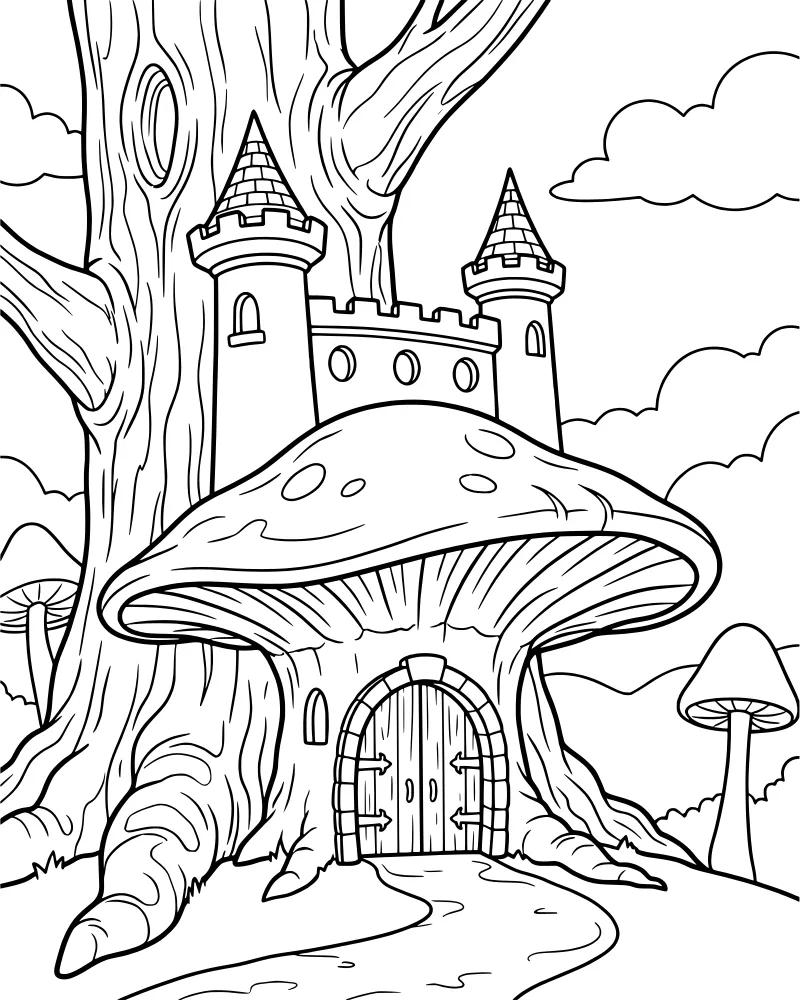
Magical Mushroom Castle and Ancient Tree
Fantasy & Mythology
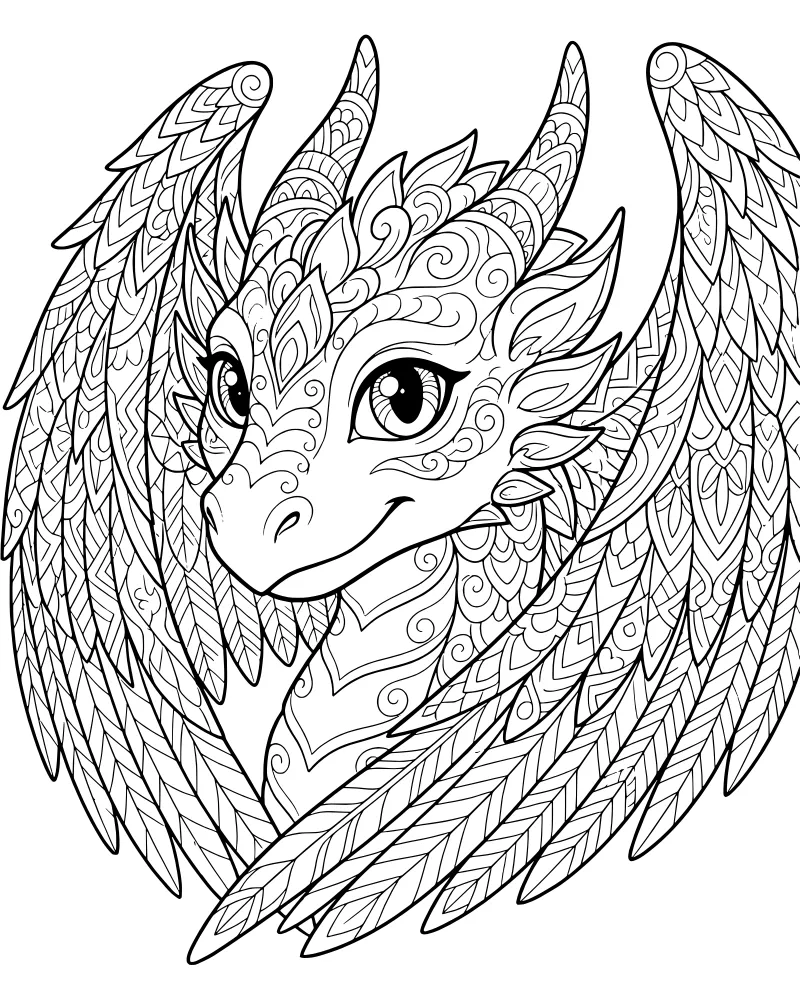
Ornate Young Dragon Portrait
Fantasy & Mythology
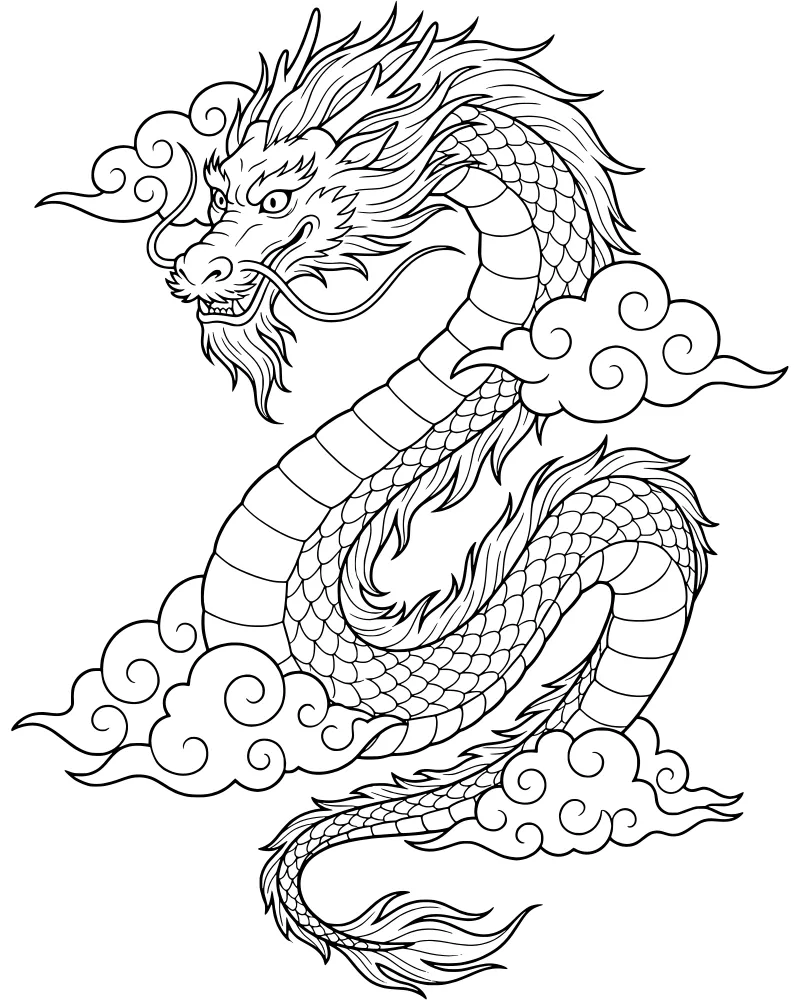
Majestic Chinese Dragon Among Clouds
Fantasy & Mythology
Magical Stone Archway and Smiling Sun
Fantasy & Mythology