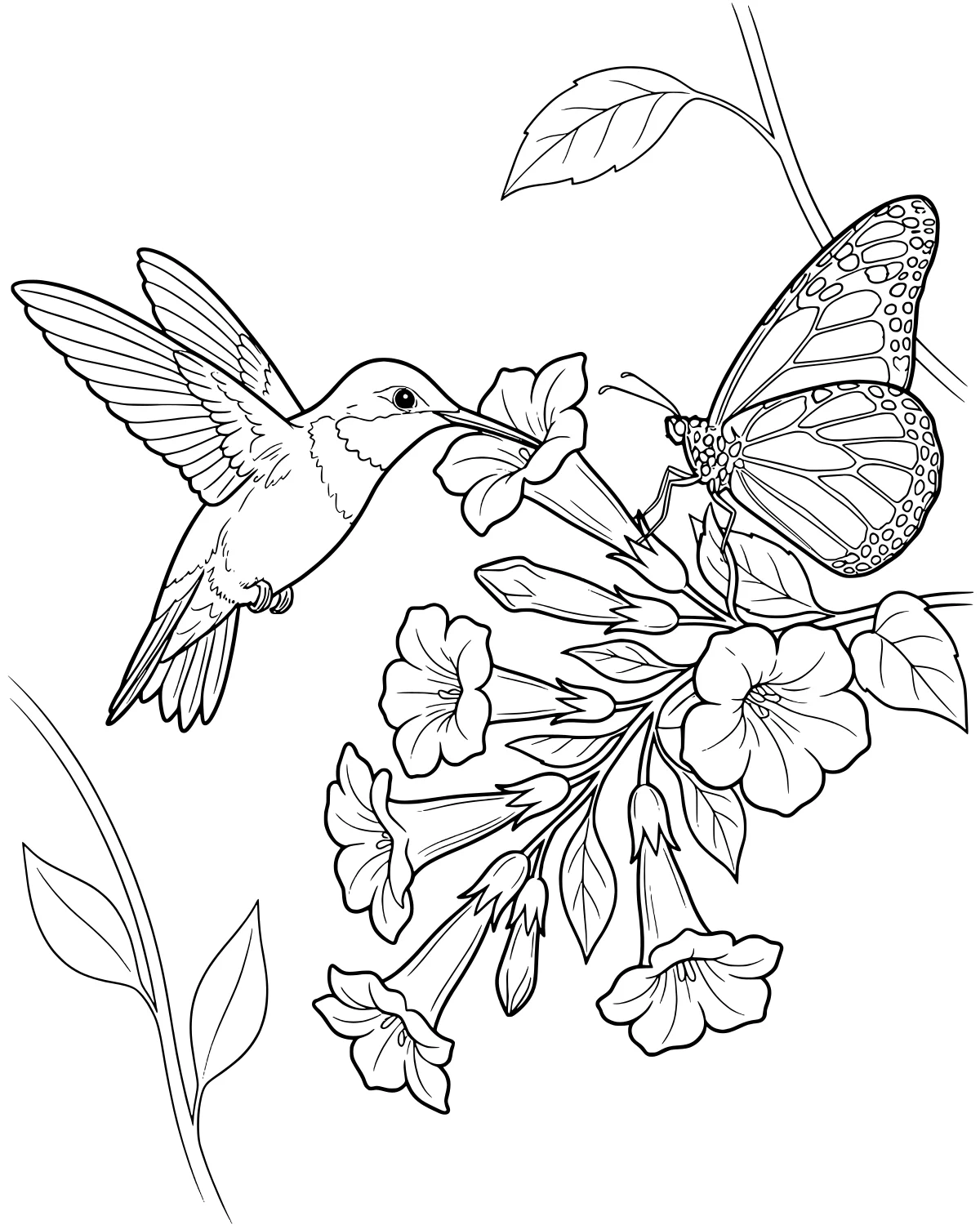
This peaceful scene captures a tiny hummingbird and a delicate butterfly visiting a lush cluster of trumpet flowers. It is a beautiful moment in nature where wings and petals come together in a quiet dance. You can almost hear the soft hum of wings as these garden friends search for sweet nectar among the long, bell-shaped blooms.
Coloring this page provides a wonderful way to relax while exploring the details of the outdoors. The combination of the fast-moving bird and the graceful butterfly creates a balanced composition that is both engaging and calming for artists of all ages.
Color Palette Ideas
What's In This Picture
At the heart of this page, you will find a vibrant hummingbird hovering with its wings spread wide, ready to reach into the deep trumpet flowers. Nearby, a graceful butterfly rests or flutters, adding another layer of life to the garden. The flowers grow along sturdy stems that twist and turn, supporting several large, textured leaves that provide a rich green backdrop.
Look closely and you will notice small flower buds tucked between the larger blooms, waiting for their turn to open. Each trumpet flower has a long, elegant shape that allows the hummingbird’s beak to reach deep inside. The overall layout highlights the interaction between these creatures and the plants they rely on for food, creating a complete ecosystem on one page.
Coloring Tips
For the hummingbird, consider using shimmering jewel tones like emerald green, ruby red, or sapphire blue to mimic their iridescent feathers. You can use a lighter touch with your colored pencils to create a sense of movement in the wings. The butterfly offers a great chance to use bright, contrasting patterns such as orange and black or yellow and purple.
The trumpet flowers often look stunning in warm shades like bright orange, deep red, or sunny yellow. Using a gradient effect where the color is darker at the base of the flower and fades toward the edges of the petals adds great depth. For the leaves and stems, try mixing different shades of green to make the foliage look more realistic and lush.
Did You Know?
Did you know that hummingbirds are the only birds that can fly backward? Their wings move so fast that they create a humming sound, which is how they got their name. These tiny birds have a very high metabolism and need to visit hundreds of flowers every single day to get enough energy to keep flying.
Try This!
After you finish coloring, try to find some trumpet-shaped flowers in a local park or garden to see if any real hummingbirds visit them. You could also research the specific type of butterfly you colored to learn about its migration patterns or what kind of plants it likes best in the summer months.
Frequently Asked Questions
What colors should I use for a hummingbird?
How do I color the trumpet flowers to make them look 3D?
Are there specific butterflies this drawing looks like?
Popular Collections
Animal Coloring Pages
Animals bring a special kind of life to any art project. Whether you love the quiet of a deep forest...
Spring Coloring Pages
As the frost melts away and the first green shoots poke through the soil, we welcome the vibrant ene...
Cute Coloring Pages
Finding something charming and sweet to color is one of the quickest ways to brighten a rainy aftern...

Kawaii Coloring Pages
Kawaii is more than just a word for cute; it is a whole aesthetic that celebrates the joy in the sma...
You Might Also Like
Whimsical Garden Inside a Light Bulb
Nature & Outdoors
Cozy Hedgehog Camping in a Jar
Nature & Outdoors
Whimsical Garden Lantern with Butterfly
Nature & Outdoors
Desert Sun Hourglass Adventure
Nature & Outdoors
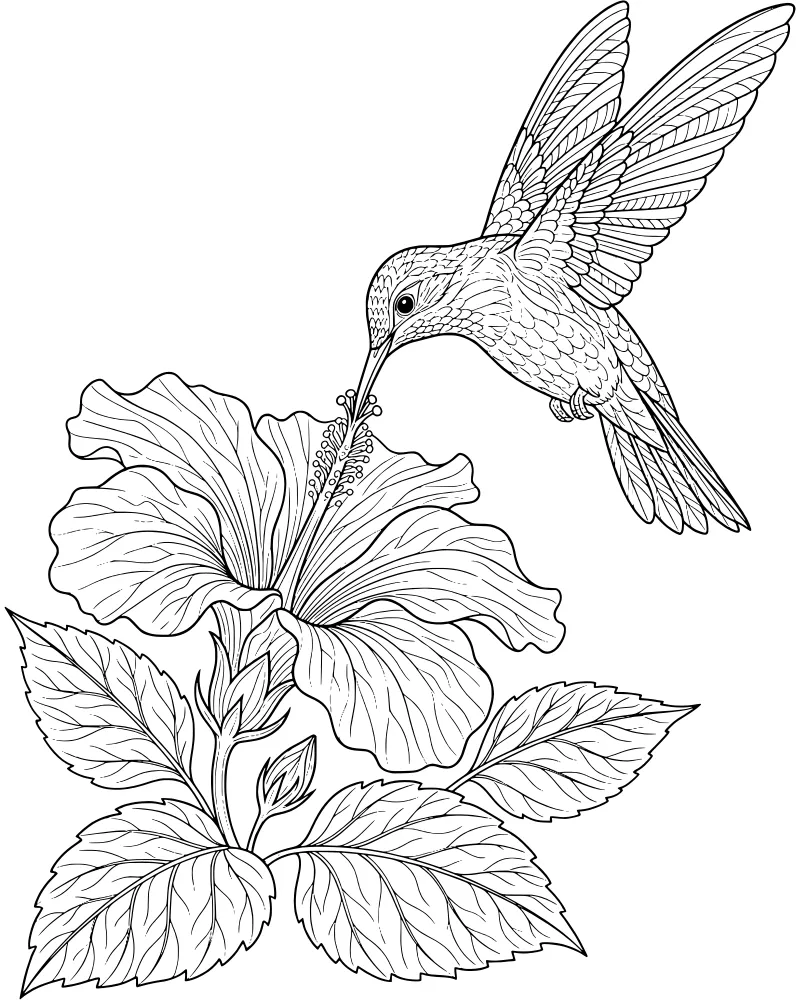
Hummingbird and Tropical Hibiscus Bloom
Nature & Outdoors
Whimsical Autumn Scarecrow and Rainbow Scene
Nature & Outdoors
Majestic Rainbow Canyon and River
Nature & Outdoors
Sunny Beach Day and Sandcastle Fun
Nature & Outdoors