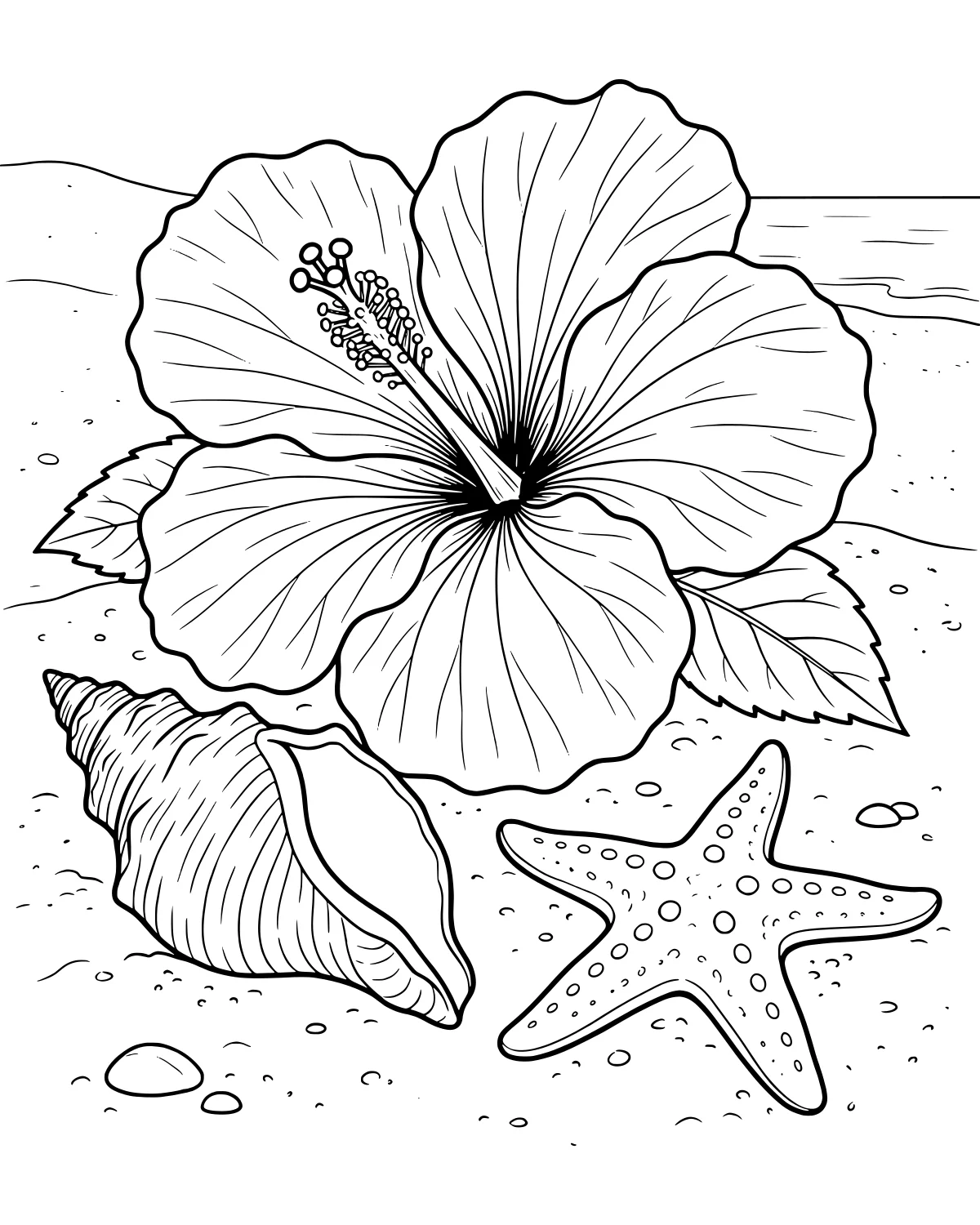
This peaceful scene brings the warmth of a tropical island right to your table. You will find a large, beautiful hibiscus flower resting gently on the sand, surrounded by lush leaves that look like they are soaking up the sun. Nearby, a curious starfish and a textured seashell sit among small stones, waiting for the next tide to come in. The gentle ocean waves roll toward the horizon, creating a relaxing atmosphere for anyone who loves the beach. It is a wonderful way to spend a quiet afternoon imagining the sound of the water and the feeling of soft sand.
Color Palette Ideas
What's In This Picture
As you look at this page, the first thing you notice is the large hibiscus flower with its distinct petals and long stamen. It sits right in the foreground next to a spiral seashell and a five-pointed starfish. The ground beneath them is covered in soft sand and scattered with small stones that add extra detail to the shore. In the background, the ocean stretches out toward the horizon line, with simple, curling waves that suggest a calm sea. The leaves tucked behind the flower have clear veins, making them easy to color with different shades of green. Every element is drawn with clean, moderate lines that are perfect for staying inside the edges while still offering plenty of space for vibrant colors.
Coloring Tips
For the hibiscus, you might try using a bright pink or a sunny yellow to make it the star of the page. You can use a darker shade near the center of the petals to give the flower some depth. The starfish looks great in orange or purple, while the seashell can be colored with soft creams or even pearlescent pastels. When you reach the ocean, try using different shades of blue and turquoise to show the movement of the water. You can leave the tops of the waves white to look like sea foam. Using a light tan or beige for the sand and adding little dots with a brown marker can help create a realistic sandy texture.
Did You Know?
Did you know that hibiscus flowers are often called shoe flowers in some parts of the world? This is because people once used the crushed petals to polish their shoes. Also, starfish are not actually fish at all. They are related to sea urchins and can even regrow their arms if they lose one.
Try This!
After you finish coloring, you can try to draw your own tiny crabs or beach balls in the empty spaces of the sand. You might also want to look up pictures of different tropical islands to see what colors their flowers and ocean water look like in real life.
Frequently Asked Questions
What colors should I use for the hibiscus?
How can I make the sand look real?
Is this page good for beginners?
Popular Collections
Animal Coloring Pages
Animals bring a special kind of life to any art project. Whether you love the quiet of a deep forest...
Spring Coloring Pages
As the frost melts away and the first green shoots poke through the soil, we welcome the vibrant ene...
Cute Coloring Pages
Finding something charming and sweet to color is one of the quickest ways to brighten a rainy aftern...


Kawaii Coloring Pages
Kawaii is more than just a word for cute; it is a whole aesthetic that celebrates the joy in the sma...
You Might Also Like
Whimsical Garden Inside a Light Bulb
Nature & Outdoors
Cozy Hedgehog Camping in a Jar
Nature & Outdoors
Whimsical Garden Lantern with Butterfly
Nature & Outdoors
Desert Sun Hourglass Adventure
Nature & Outdoors
Hummingbird and Tropical Hibiscus Bloom
Nature & Outdoors
Whimsical Autumn Scarecrow and Rainbow Scene
Nature & Outdoors
Majestic Rainbow Canyon and River
Nature & Outdoors
Sunny Beach Day and Sandcastle Fun
Nature & Outdoors