Explore our collection of rainbow coloring pages. From magical unicorns to pots of gold, find high-quality printable designs for all ages at ColoringForFun.
Rainbow Coloring Pages
About This Collection
Few things capture the human spirit quite like the sight of a vibrant arc stretching across the sky. Rainbow coloring pages offer a wonderful way to bring that sense of wonder into your home. Whether it follows a summer rain or accompanies a mythical creature, a rainbow serves as a symbol of hope and promise. These pages provide a relaxing activity that helps children learn about the natural world while exploring their own artistic preferences.
Working with these designs allows artists of all ages to experiment with a full spectrum of hues. From soft pastels to bold primary colors, the possibilities are truly endless. By focusing on each band of color, you can practice patience and precision while creating a masterpiece that brightens any room.
The Science and Wonder of the Rainbow Spectrum
A rainbow is a beautiful bridge between the sun and the rain. It appears when sunlight passes through raindrops at just the right angle, bending the light and separating it into the colors we see. This process, called refraction, is a great science lesson for young artists. When you sit down with your crayons, you are essentially recreating a miracle of physics on paper. It helps to remember the order of the colors—red, orange, yellow, green, blue, indigo, and violet—but there are no rules in art. You can choose to follow nature exactly or create a custom palette that reflects your mood.
The symbolism of these colorful arcs is universal across many different cultures. They often represent a path between different worlds or a sign of peace after a storm. This makes them a perfect subject for coloring because they carry a positive message. Whether the sky is filled with clouds or clear and bright, adding a splash of multi-colored light changes the entire feeling of the landscape. It encourages a sense of optimism and joy that stays with you long after the page is finished.
Choosing the Perfect Palette for Your Scene
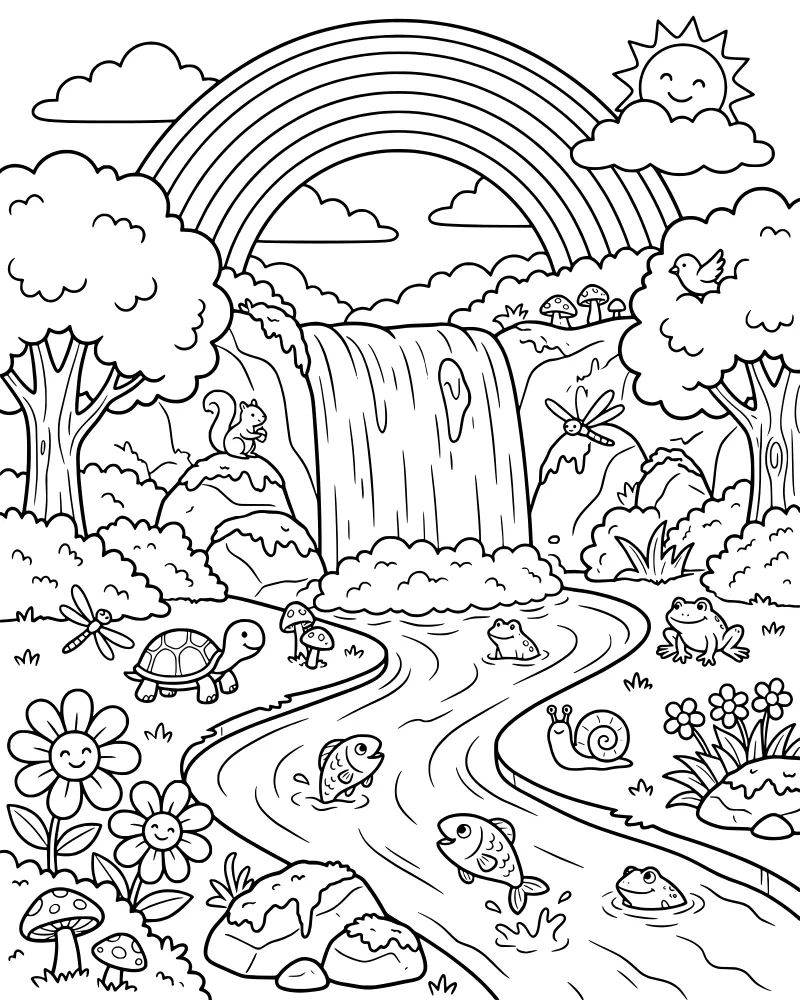
When you start working on a new page, think about the atmosphere you want to create. If you are coloring a scene like the Happy Waterfall and Forest Rainbow, you might want to use deep greens for the trees and a shimmering silver for the water. The rainbow itself can be the centerpiece, standing out against a soft blue sky. Using different mediums can also add texture. For instance, watercolor paints are excellent for blending the edges of each color band, mimicking the soft, hazy look of a real rainbow in the atmosphere.
Alternatively, you could try a monochrome approach for the background to make the colors of the arc really stand out. Using shades of gray or sepia for the landscape allows the rainbow to be the focal point of the artwork. This contrast highlights the beauty of the spectrum and gives your piece a professional, artistic look. Don't be afraid to use glitter glue or metallic markers for the very last band of color to add a little bit of extra sparkle and light to your creation.
Rainbows in Legends and Folklore
Throughout history, people have told stories about what lies where the rainbow touches the ground. The most famous legend involves a hidden treasure guarded by mischievous spirits. The Pot of Gold at Rainbow End captures this sense of mystery and excitement perfectly. Coloring these types of pages allows you to explore themes of luck and adventure. You can use bright, shiny yellows for the coins and vibrant greens for the surrounding shamrocks to lean into the festive, magical theme of the story.
Beyond pots of gold, rainbows appear in many other myths as bridges for gods or paths for magical creatures. They are often associated with friendship and unity because they bring all the different colors together into one harmonious shape. This makes them a wonderful tool for teaching children about diversity and how different elements can work together to create something beautiful. Every color is important, and without one of them, the rainbow wouldn't be complete.
The Educational Value of Artistic Expression
Art is a powerful tool for development, and coloring within specific lines helps improve hand-eye coordination. For young children, identifying the different bands of a rainbow is a great way to practice color recognition and naming. It also provides an opportunity to talk about weather patterns and how the sun and rain interact. In the Artist Mother and Child Painting illustration, we see how art can be a collaborative process that fosters communication and shared learning between generations.
Coloring also offers a quiet moment of mindfulness in a busy day. It allows the mind to focus on a single task, which can be very calming for both kids and adults. By choosing which colors to use and how to apply them, you are making decisions and expressing your personality. This builds confidence and encourages a lifelong love of being creative. Taking the time to sit down and finish a page provides a sense of accomplishment that is very rewarding.
Creative Ways to Display Your Finished Art
Once you have finished your masterpiece, there are many ways to share it with others. You can cut out the rainbows and tape them to your windows to catch the light, creating a stained-glass effect for neighbors to see. Another fun idea is to create a "weather wall" in your playroom, grouping your rainbow pages with drawings of suns, clouds, and lightning bolts. This helps create a vibrant and educational environment that celebrates the beauty of nature.
If you have several finished pages, you can even bind them together to make a custom book of colors. Using a hole punch and some colorful yarn, you can create a portfolio that shows off your progress over time. This makes a wonderful keepsake or a thoughtful gift for a grandparent or friend. Sharing your art is a way to spread the joy and positivity that rainbows represent, making the world a little bit brighter one page at a time.