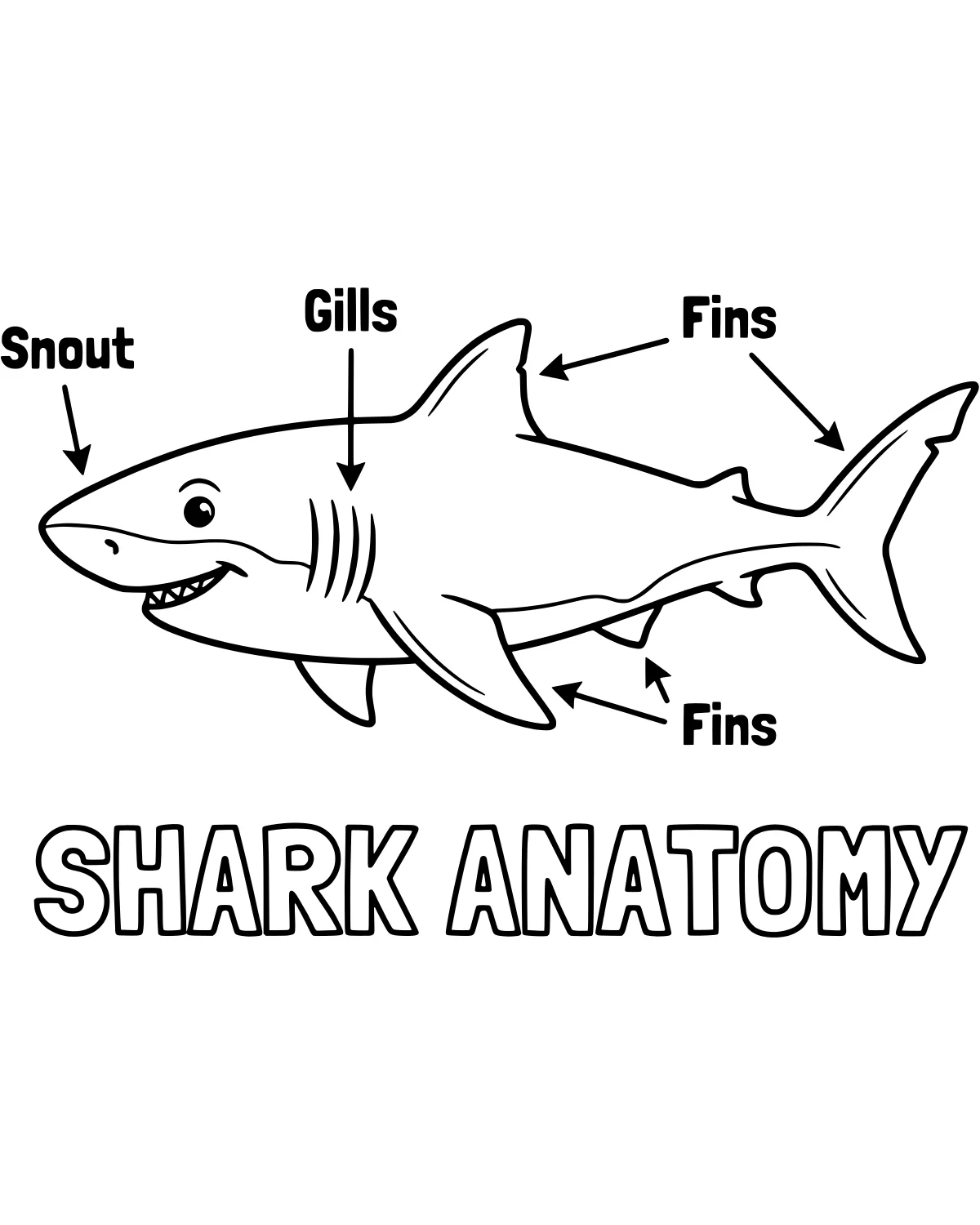
Explore the world of marine biology with this friendly shark anatomy diagram. This page provides a fun way to learn about the ocean's most famous predators while enjoying a quiet coloring session. You will find a cheerful shark centered on the page, surrounded by labels that identify its unique physical features. \n\nIt is an excellent choice for young students who want to understand how these amazing creatures swim and live in the sea. This educational layout makes it easy to visualize how each part of the body helps the shark navigate the deep blue waters.
Color Palette Ideas
What's In This Picture
The center of the page features a large, smiling shark with clear lines that make it easy to color. You can see the sharp teeth inside its mouth and its curious eye looking forward. Various labels point to essential parts of the body, including the snout, the gills used for breathing, and the powerful tail that pushes it through the waves. \n\nThe different fins are also highlighted, showing the dorsal fin on top and the pectoral fins on the sides. At the top, the bold text reads SHARK ANATOMY, tying the whole informative scene together. Each element is clearly defined, making it a great resource for learning while being creative with your favorite colors.
Coloring Tips
Since this is a cartoon-style shark, you can choose traditional ocean colors or go for something more vibrant. Grays and blues are classic choices for the shark's back, while a lighter shade like soft cream works well for the belly. You might want to use a bright, contrasting color for the labels and the "SHARK ANATOMY" text to make them stand out. \n\nUsing colored pencils can help you stay within the lines of the smaller details like the teeth and the gill slits. If you want a more artistic look, try blending two shades of blue on the body to simulate how light hits a creature underwater. Adding a light blue wash to the background can help the shark pop off the page.
Did You Know?
Sharks do not have bones. Their entire skeleton is made of cartilage, which is the same flexible material found in your nose and ears. This makes them light and helps them swim very fast! Most sharks also have to keep swimming to stay alive so that oxygen-rich water stays moving over their gills.
Try This!
After you finish coloring, try to point to each part of the shark and say its name out loud to practice your biology vocabulary. You can also look up photos of different shark species, like a Great White or a Hammerhead, and see if you can find these same body parts on them.
Frequently Asked Questions
What is the best way to color the shark's teeth?
Can I use markers on this page?
Why is the tail important?
Popular Collections



Animal Coloring Pages
Animals bring a special kind of life to any art project. Whether you love the quiet of a deep forest...



Spring Coloring Pages
As the frost melts away and the first green shoots poke through the soil, we welcome the vibrant ene...

Cute Coloring Pages
Finding something charming and sweet to color is one of the quickest ways to brighten a rainy aftern...



Kawaii Coloring Pages
Kawaii is more than just a word for cute; it is a whole aesthetic that celebrates the joy in the sma...
You Might Also Like
May Nature Scavenger Hunt Adventure
Educational

Playful Puppy Inside Letter D
Educational
Wise Owl and Letter O
Educational

Whimsical Letter H House
Educational

Zebra and Letter Z Savanna Scene
Educational

Whale and Letter W Alphabet
Educational

Letter T Steam Train Adventure
Educational
Playful Jellyfish Floating with Letter J
Educational