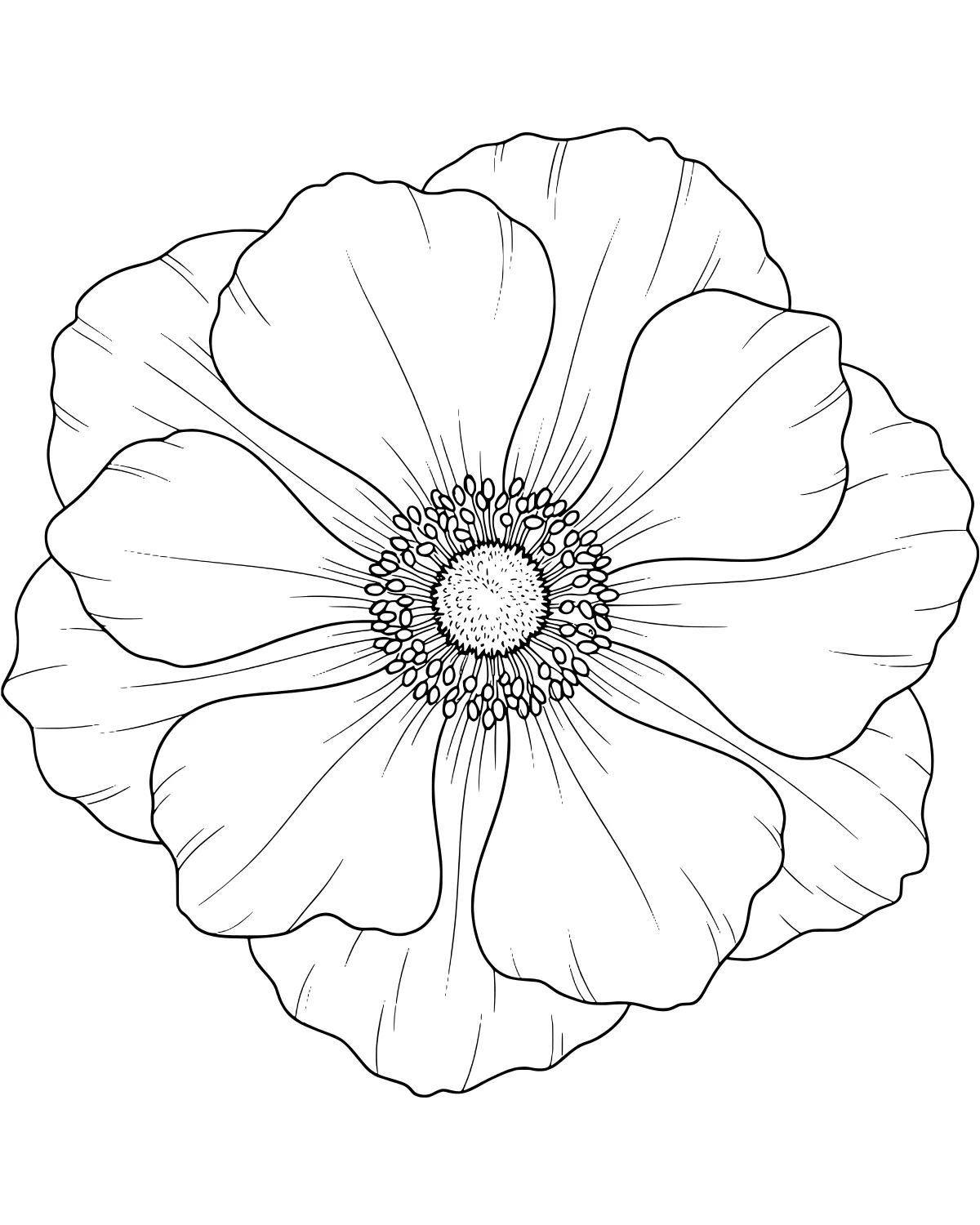
This elegant anemone flower offers a peaceful moment to pause and focus on the beauty of nature. Looking directly down at the bloom, you can see how each petal overlaps to create a soft, circular shape. It is a wonderful subject for anyone who enjoys the quiet details of a garden. The delicate petals surround a complex center, making this a perfect choice for a relaxing afternoon. Whether you prefer bright, bold shades or soft pastels, this floral scene provides a clean canvas for your favorite colors.
Color Palette Ideas
What's In This Picture
As you look at this illustration, the first thing you notice is the large, rounded petals that fan out from the middle. Moving inward, the stamen and anthers create a textured ring around the very center of the bloom. This central area, containing the pistil, is full of tiny details that represent the heart of the flower. Each part of the plant is clearly defined, from the smooth curves of the outer edges to the intricate botanical structures in the core. The top-down perspective highlights the symmetrical beauty found in nature. There is plenty of space to experiment with different shades on every single petal.
Coloring Tips
For a realistic look, try using a gradient effect on the petals. Start with a deeper shade near the center and gradually lighten the color toward the outer edges. Since anemones come in many varieties, you could choose deep purples, bright whites with blue centers, or even vibrant reds. Use a fine-tipped marker or a sharp colored pencil to fill in the small anthers and the stamen to make the center pop. Adding a light shadow underneath the overlapping petals can give the flower a sense of depth and three-dimensional form. You might even leave the very tips of the petals a lighter color to simulate sunlight hitting the bloom.
Did You Know?
Anemone flowers are often called windflowers because the name comes from the Greek word for wind. In many cultures, they are thought to bring luck and protect against evil. These flowers belong to the buttercup family and can be found in many different colors all around the world. Bees and butterflies love visiting them for their pollen.
Try This!
After finishing your masterpiece, you can research the different colors anemones grow in and try to match them with your next drawing. You might also try drawing your own garden scene around the flower to give it a home. Consider cutting out your colored flower to create a beautiful 3D card for a friend or family member.
Frequently Asked Questions
What kind of flower is this?
What colors should I use for the center?
Is this page good for beginners?
Popular Collections



Animal Coloring Pages
Animals bring a special kind of life to any art project. Whether you love the quiet of a deep forest...



Cute Coloring Pages
Finding something charming and sweet to color is one of the quickest ways to brighten a rainy aftern...


Kawaii Coloring Pages
Kawaii is more than just a word for cute; it is a whole aesthetic that celebrates the joy in the sma...


Funny Coloring Pages
Laughter is a wonderful part of childhood, and our collection of Funny Coloring Pages is designed to...
You Might Also Like
Whimsical Garden Inside a Light Bulb
Nature & Outdoors
Cozy Hedgehog Camping in a Jar
Nature & Outdoors
Whimsical Garden Lantern with Butterfly
Nature & Outdoors
Desert Sun Hourglass Adventure
Nature & Outdoors

Majestic Rainbow Canyon and River
Nature & Outdoors
Hummingbird and Tropical Hibiscus Bloom
Nature & Outdoors

Sunny Beach Day and Sandcastle Fun
Nature & Outdoors
Whimsical Autumn Scarecrow and Rainbow Scene
Nature & Outdoors