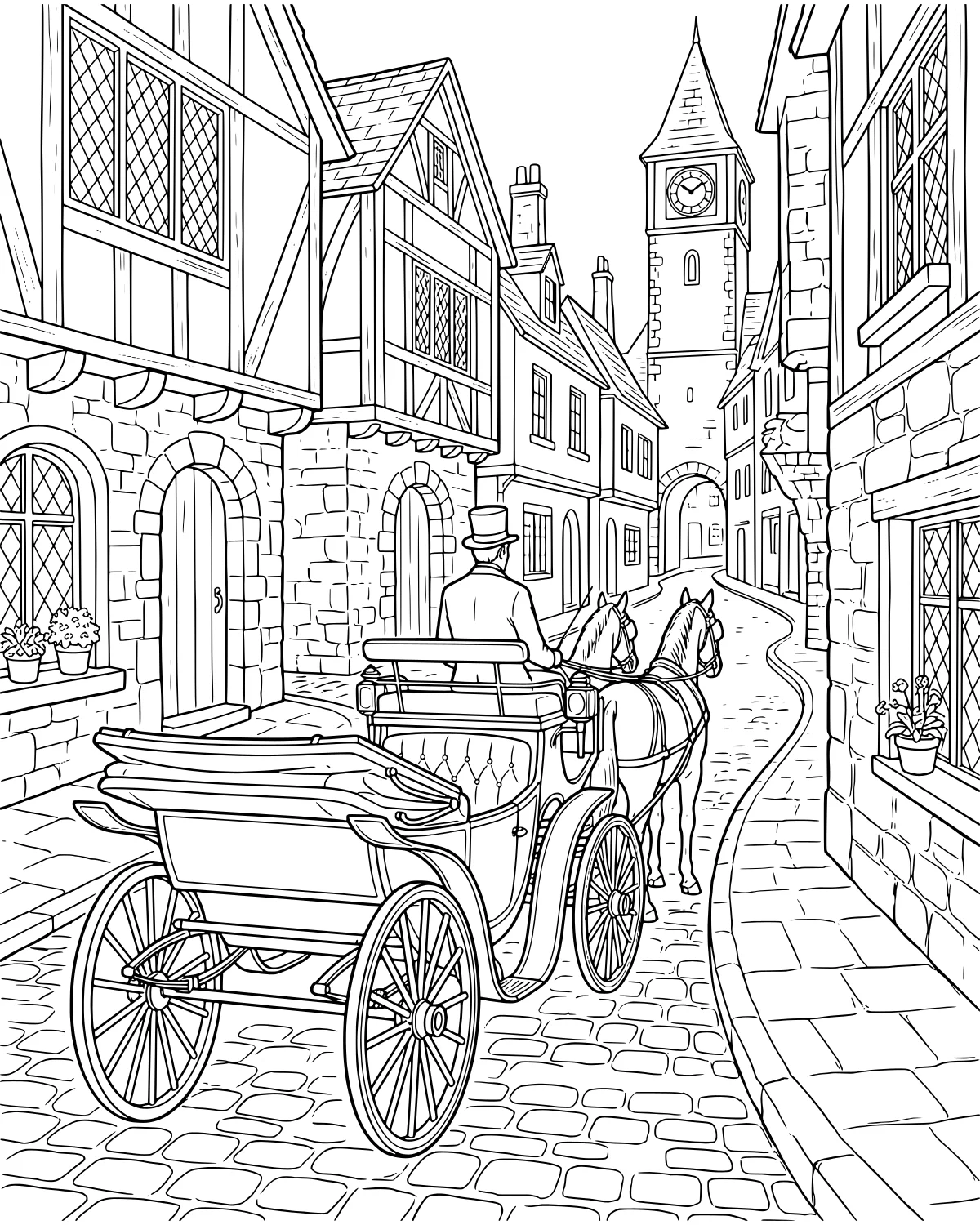
Travel back to a simpler time with this beautiful scene of a horse-drawn carriage making its way through a peaceful village. The horses are leading the way down a winding cobblestone street, guided by a driver in a classic top hat. It is a quiet afternoon where the only sound is the rhythmic clip-clop of hooves against the stone path.
As you look closer, you will see the stunning Tudor-style architecture lining the road. The tall clock tower in the distance stands as a landmark for the whole town. This page offers a wonderful chance to explore history while choosing your favorite colors for the old stone walls and timber-framed houses.
Color Palette Ideas
What's In This Picture
The centerpiece of this illustration is a detailed horse-drawn carriage pulled by two strong horses. The driver sits high up on the bench wearing a tall top hat, ready to navigate the narrow street. Below the wheels, the cobblestone street stretches forward, showing individual stones that you can color in various shades of grey and brown.
The buildings on either side showcase classic timber framing and stone walls, common in historic Tudor designs. Look for the diamond-paned windows and arched doorways that give these shops and homes so much character. In the background, a majestic clock tower rises above the rooftops, complete with tall chimneys and small potted plants sitting on windowsills to add a touch of life to the scene.
Coloring Tips
To capture the nostalgic feel of this historic town, try using earthy tones like deep browns, warm tans, and slate greys for the buildings and the street. The timber framing on the houses looks best when colored with a dark chocolate brown to contrast against lighter cream or white walls. For the horses, you might choose a rich bay reddish-brown or a dappled grey to make them stand out as they pull the carriage.
The clock tower in the distance provides a great opportunity for subtle shading. You can use lighter pressure with your pencils or crayons to make the distant buildings appear further away. Adding a splash of color to the potted plants, like bright red or yellow flowers, will create small focal points that bring the entire neighborhood to life.
Did You Know?
Before cars were invented, horse-drawn carriages were the main way people traveled around cities. Tudor-style houses are famous for their black timber beams and white plaster walls, a style that was very popular in England hundreds of years ago. These buildings often had jettying, where the upper floors were built wider than the ground floor.
Try This!
After finishing your masterpiece, try writing a short story about where the passengers in the carriage are going. You could also research famous clock towers around the world, like Big Ben in London, to see how they compare to the one you just colored.
Frequently Asked Questions
What colors were Tudor houses usually?
How should I color the cobblestones?
Is this page good for markers?
Popular Collections

Animal Coloring Pages
Animals bring a special kind of life to any art project. Whether you love the quiet of a deep forest...
Spring Coloring Pages
As the frost melts away and the first green shoots poke through the soil, we welcome the vibrant ene...

Cute Coloring Pages
Finding something charming and sweet to color is one of the quickest ways to brighten a rainy aftern...


Kawaii Coloring Pages
Kawaii is more than just a word for cute; it is a whole aesthetic that celebrates the joy in the sma...
You Might Also Like

Off-Road Jungle Adventure Truck
Vehicles & Transportation
Vintage Car in Countryside Village
Vehicles & Transportation
Busy City Street and Vehicles
Vehicles & Transportation
Rally Car Racing Through Snowy Mountains
Vehicles & Transportation
Busy Harbor with Sailboats and Bridge
Vehicles & Transportation
Busy Construction Site with Big Trucks
Vehicles & Transportation
Busy City with Flying Helicopter
Vehicles & Transportation
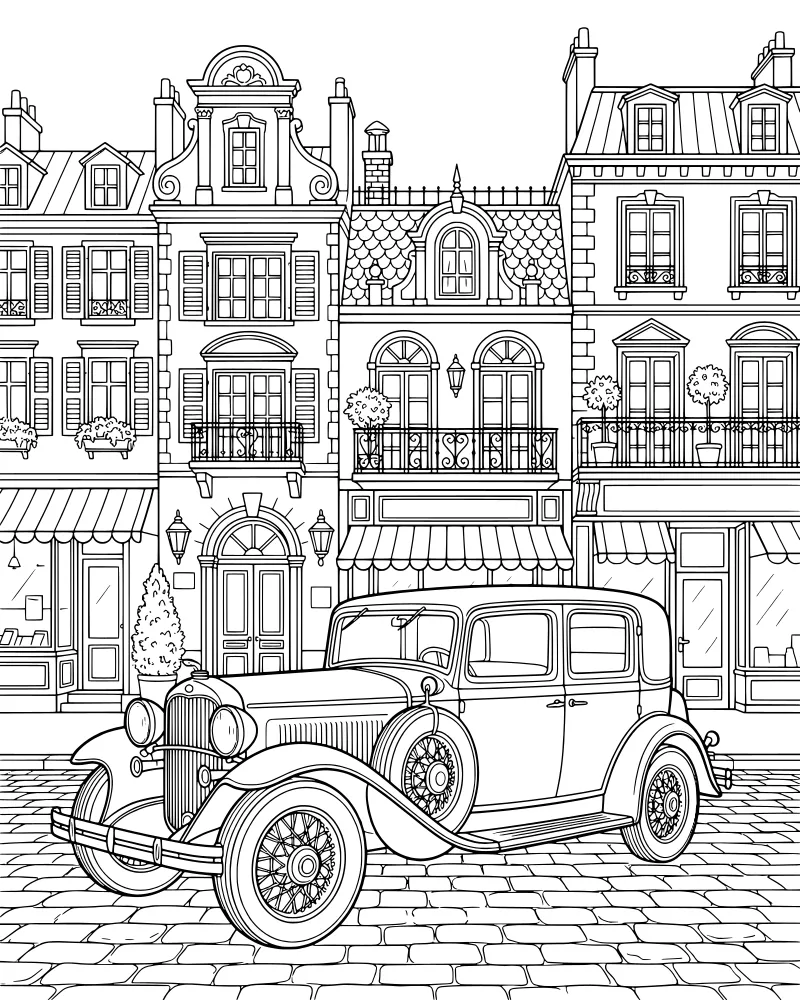
Vintage Car on European Cobblestone Street
Vehicles & Transportation