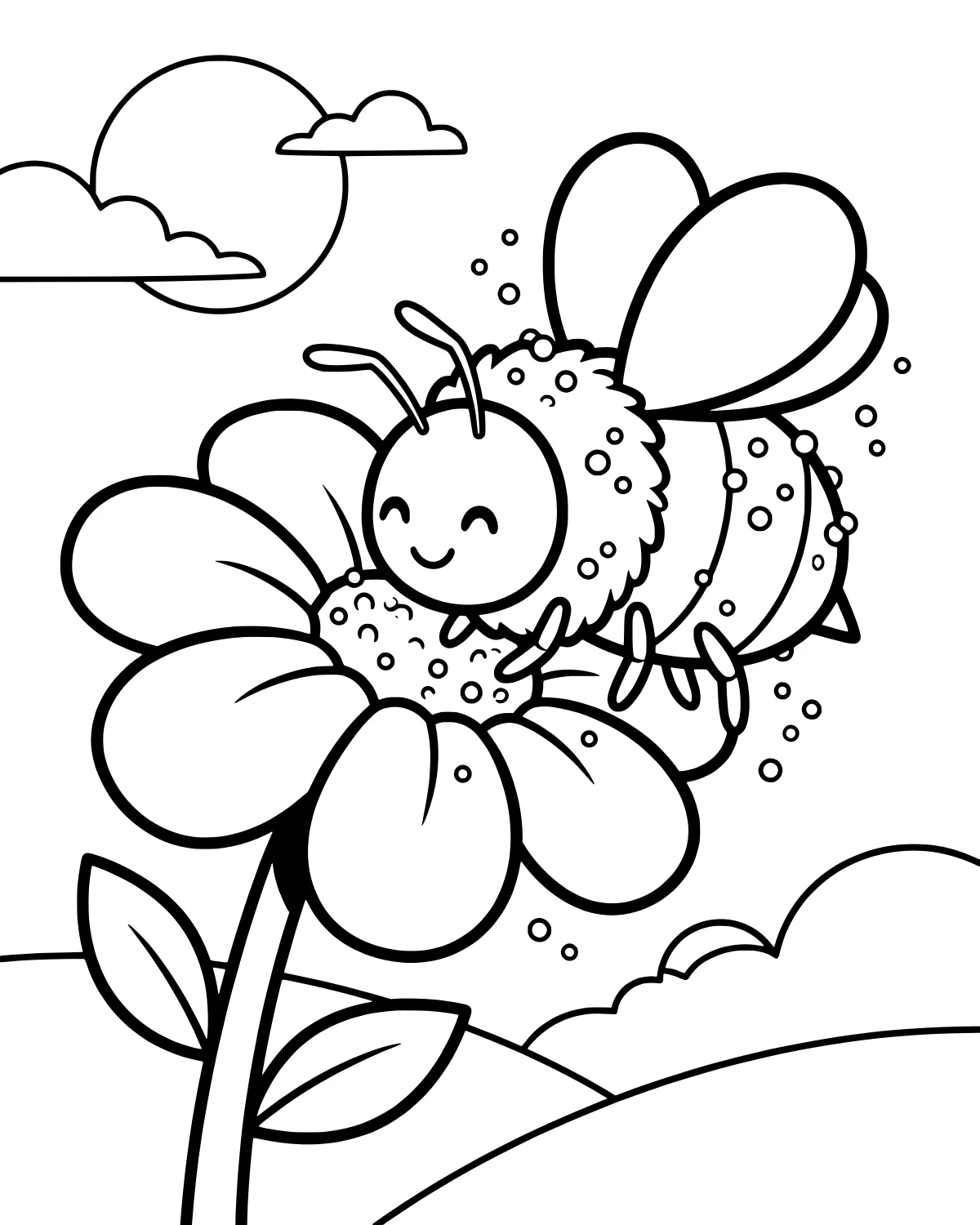
This charming scene captures a happy bee taking a well-deserved break on a massive, blooming flower. The cheerful expression on the bee's face makes this a wonderful choice for young artists who enjoy friendly characters. Surrounded by a bright sky and rolling hills, the image feels full of warmth and life.
Coloring this page is a great way to explore the beauty of nature while focusing on a single, bold subject. The blooming flower provides a sturdy platform for our buzzing friend, while the tiny particles of pollen floating nearby add a sense of movement to the still afternoon. It is a peaceful moment in a busy garden that anyone would enjoy bringing to life with color.
Color Palette Ideas
What's In This Picture
At the center of the page, a large cartoon bee with big, friendly eyes sits comfortably atop a wide flower. The bee has distinct stripes and soft wings that are waiting for a splash of color. Below the bee, the flower features a thick stem and two broad leaves that stretch out toward the edges of the frame. Floating around the petals are tiny circles representing pollen particles, showing just how hard this little worker has been at its job.
In the background, a smiling sun peeks out from behind soft, fluffy clouds, casting a glow over the entire scene. The ground is made of gentle rolling hills that suggest a vast, open meadow stretching far into the distance. Every element, from the tiny antennae on the bee to the simple curves of the landscape, is designed with clear lines that make it easy to stay within the boundaries while adding your own personal touch.
Coloring Tips
For the bee, using a bright golden yellow contrasted with a deep navy or dark brown for the stripes creates a classic look without using pure black. You might try using a very light blue or a shimmering silver for the wings to give them a translucent, airy feel. The flower is a great opportunity to use your favorite bold colors like vibrant pink, orange, or even a deep purple to make the center subject really pop against the green leaves.
When working on the background, consider using a soft gradient for the sky, starting with a darker blue at the top and fading to a lighter shade near the horizon. The rolling hills can be colored in different shades of green to show depth, with the closer hills being darker and the ones in the far distance appearing slightly lighter. Using a light touch with your crayons or pencils on the clouds will help them keep their soft, fluffy appearance.
Did You Know?
Did you know that bees have five eyes? They have two large compound eyes on the sides of their heads and three tiny simple eyes on the top. These extra eyes help them see ultraviolet light, which helps them find the secret patterns on flower petals that point the way to tasty nectar. It is like having a hidden map that only bees can see.
Try This!
After you finish coloring, try counting all the pollen particles floating around the flower to see how much the bee has collected. You can also give your bee a name and write a short story about where it is flying next. If you have extra space on the page, try drawing a few more insect friends like a ladybug or a butterfly joining the bee in the meadow.
Frequently Asked Questions
What colors should I use for the bee's stripes?
How can I make the pollen look like it is floating?
What is the best way to color the sun and clouds?
Popular Collections

Animal Coloring Pages
Animals bring a special kind of life to any art project. Whether you love the quiet of a deep forest...
Cute Coloring Pages
Finding something charming and sweet to color is one of the quickest ways to brighten a rainy aftern...

Kawaii Coloring Pages
Kawaii is more than just a word for cute; it is a whole aesthetic that celebrates the joy in the sma...

Funny Coloring Pages
Laughter is a wonderful part of childhood, and our collection of Funny Coloring Pages is designed to...
You Might Also Like
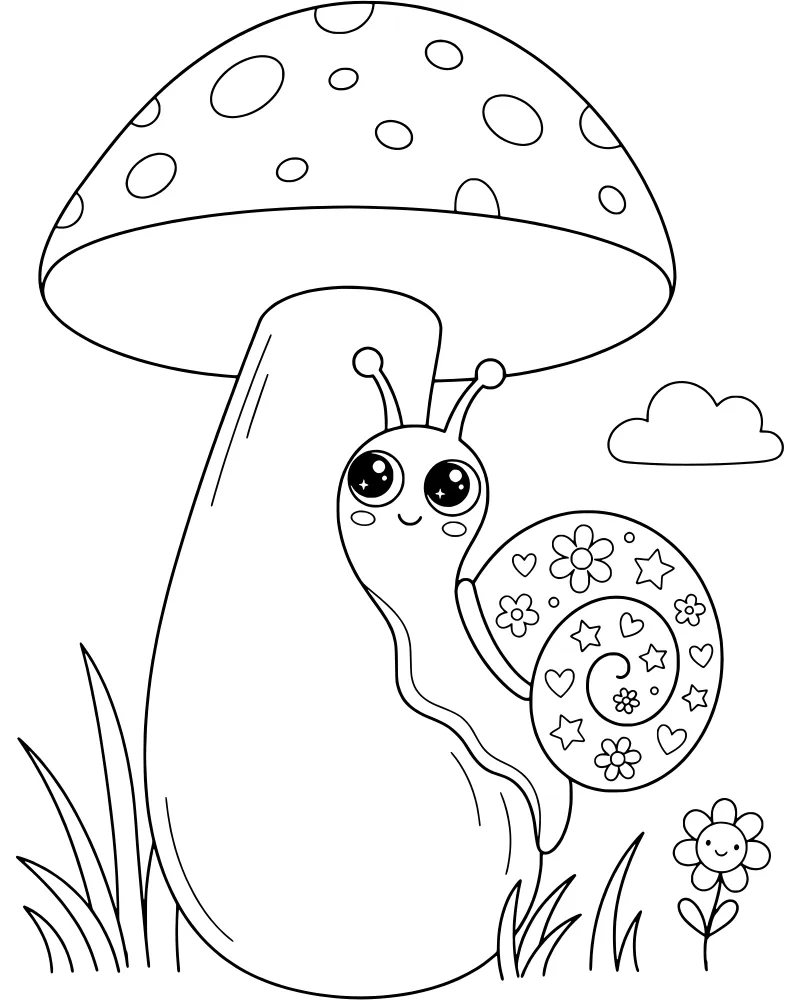
Cute Snail Peeking Behind a Mushroom
Bugs & Insects
Ladybug Resting on a Blooming Rose
Bugs & Insects
Butterfly Resting on a Snail Shell
Bugs & Insects
Butterfly and Caterpillar in the Garden
Bugs & Insects
Sunny Day Butterfly and Dragonfly
Bugs & Insects
Butterfly and Hot Air Balloon Sky Adventure
Bugs & Insects
Cute Butterfly in Starry Night Sky
Bugs & Insects
Happy Bee Flying Over Lavender Field
Bugs & Insects