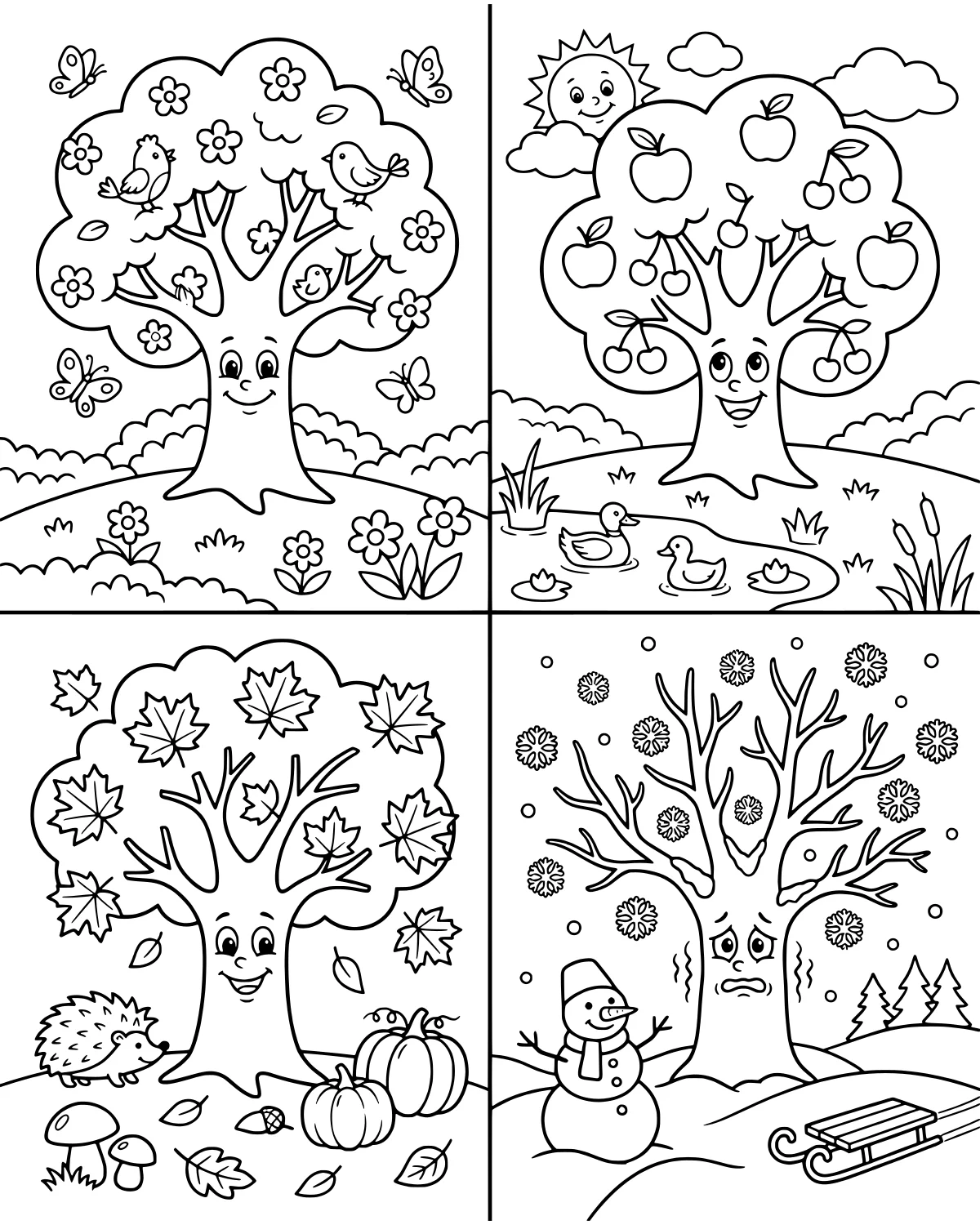
Experience the beautiful transformation of nature with this seasonal tree cycle illustration. This page captures the unique magic of each time of year, from the first buds of spring to the quiet hush of winter. It is a wonderful way to see how plants and animals adapt as the weather changes around them.
As you move through the four distinct panels, you will find a cheerful tree acting as the main character. Each section offers a new world to explore, filled with specific plants, animals, and weather patterns that make every season special. It is a perfect scene for anyone who loves spending time outdoors and watching the world change.
Color Palette Ideas
What's In This Picture
In the first panel, a tree with flowers stands tall while birds and butterflies flutter near fluffy clouds. Bright flowers peek through the grass as everything begins to wake up. Moving to the second panel, the tree with apples and cherries is full of life under a warm sun. You can spot ducks swimming in a pond surrounded by tall reeds.
The third panel shows a tree with maple leaves turning vibrant shades. A small hedgehog explores near mushrooms, an acorn, and scattered leaves, while large pumpkins sit nearby. Finally, the fourth panel features a bare tree with snowflakes falling gently. A friendly snowman stands near a wooden sledge, with pine trees dotting the snowy hills in the distance.
Coloring Tips
For the spring panel, try using soft pinks and light greens to capture the feeling of new growth. The summer scene looks best with bold, saturated colors like bright red for the apples and a deep blue for the pond water. You can make the sun look extra warm by blending yellows and oranges together.
When you reach the autumn section, focus on warm earthy tones. Use a mix of burnt orange, gold, and deep brown for the maple leaves and the pumpkins. For the winter panel, you can create a chilly effect by using very light blues or purples for the shadows on the snowy hills. Leaving some areas white helps the snowflakes and the snowman stand out against the background.
Did You Know?
Did you know that the Earth has seasons because its axis is tilted as it travels around the sun? This tilt means different parts of the planet get more direct sunlight at different times of the year. This movement is what causes the changes in temperature and daylight that we see as spring, summer, autumn, and winter.
Try This!
After finishing the page, try to name one specific activity you enjoy doing in each of the seasons shown. You can also look out the window and decide which of the four panels most closely matches the weather outside right now. Identifying the different fruits and animals in each section is another great way to learn about the natural world.
Frequently Asked Questions
Which season should I start coloring first?
What colors are best for the autumn leaves?
How do I make the snow look cold?
Popular Collections


Animal Coloring Pages
Animals bring a special kind of life to any art project. Whether you love the quiet of a deep forest...
Spring Coloring Pages
As the frost melts away and the first green shoots poke through the soil, we welcome the vibrant ene...
Cute Coloring Pages
Finding something charming and sweet to color is one of the quickest ways to brighten a rainy aftern...


Kawaii Coloring Pages
Kawaii is more than just a word for cute; it is a whole aesthetic that celebrates the joy in the sma...
You Might Also Like
Teacher Appreciation Apple Mandala
Educational
Science Princess in the Lab
Educational
Sunny Classroom with Teacher and Globe
Educational
May Nature Scavenger Hunt Adventure
Educational
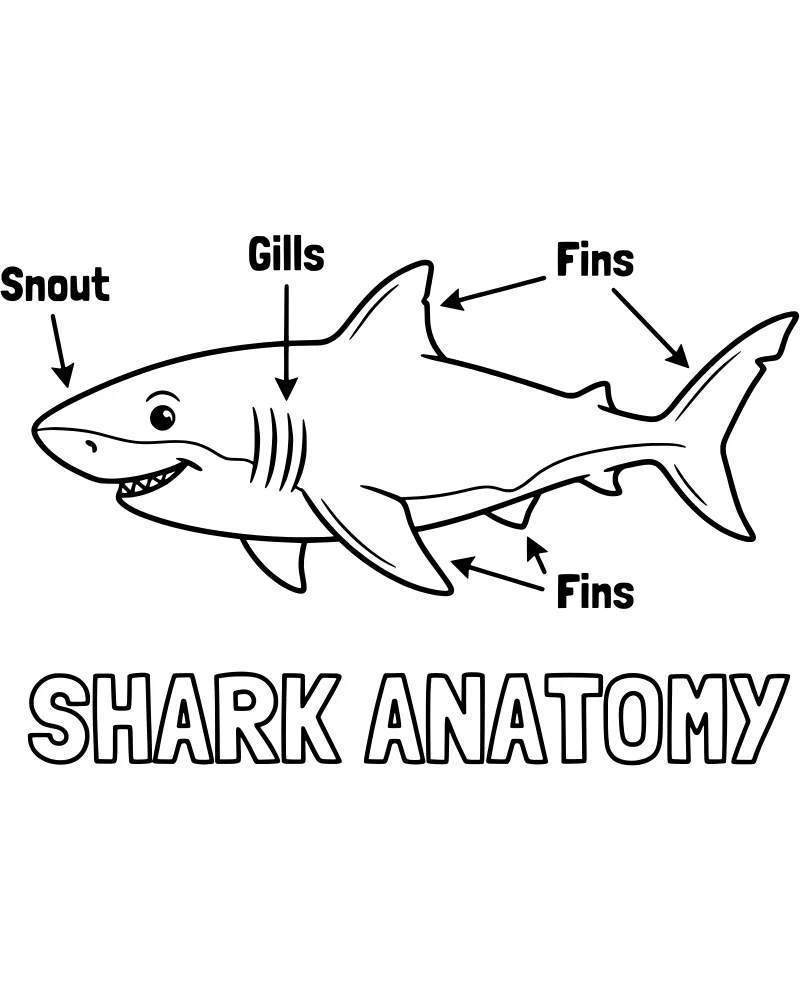
Shark Anatomy Diagram for Kids
Educational
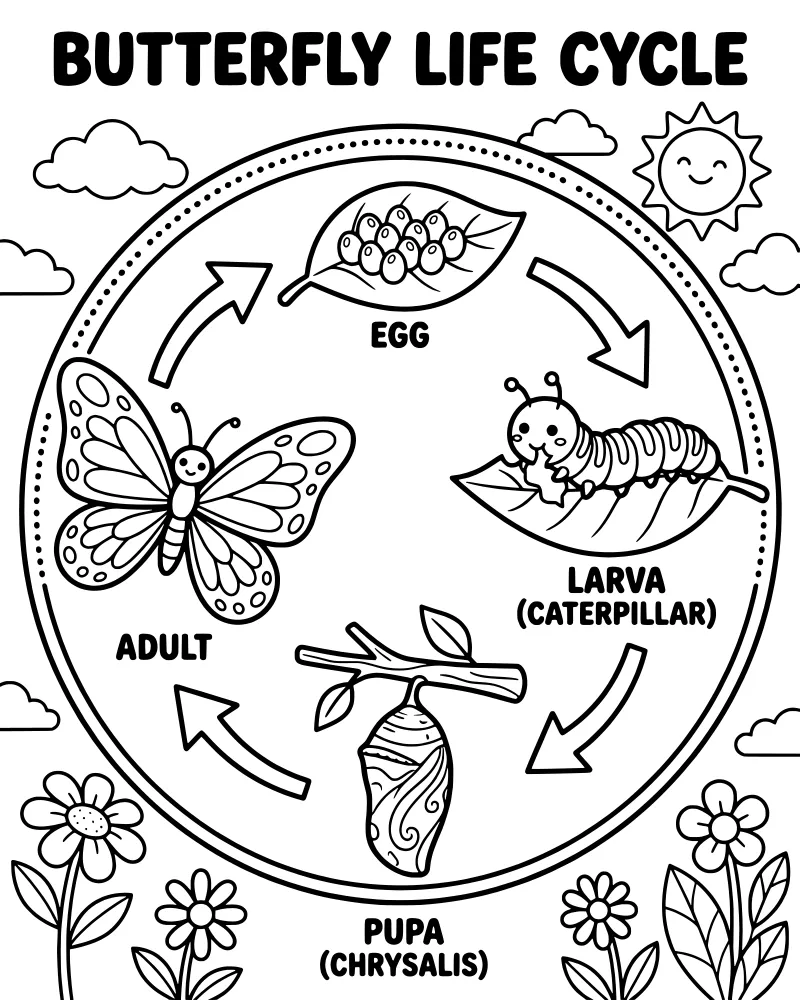
Butterfly Life Cycle Diagram
Educational

Musical Xylophone and Letter X
Educational

Playful Letter F and Little Fish
Educational