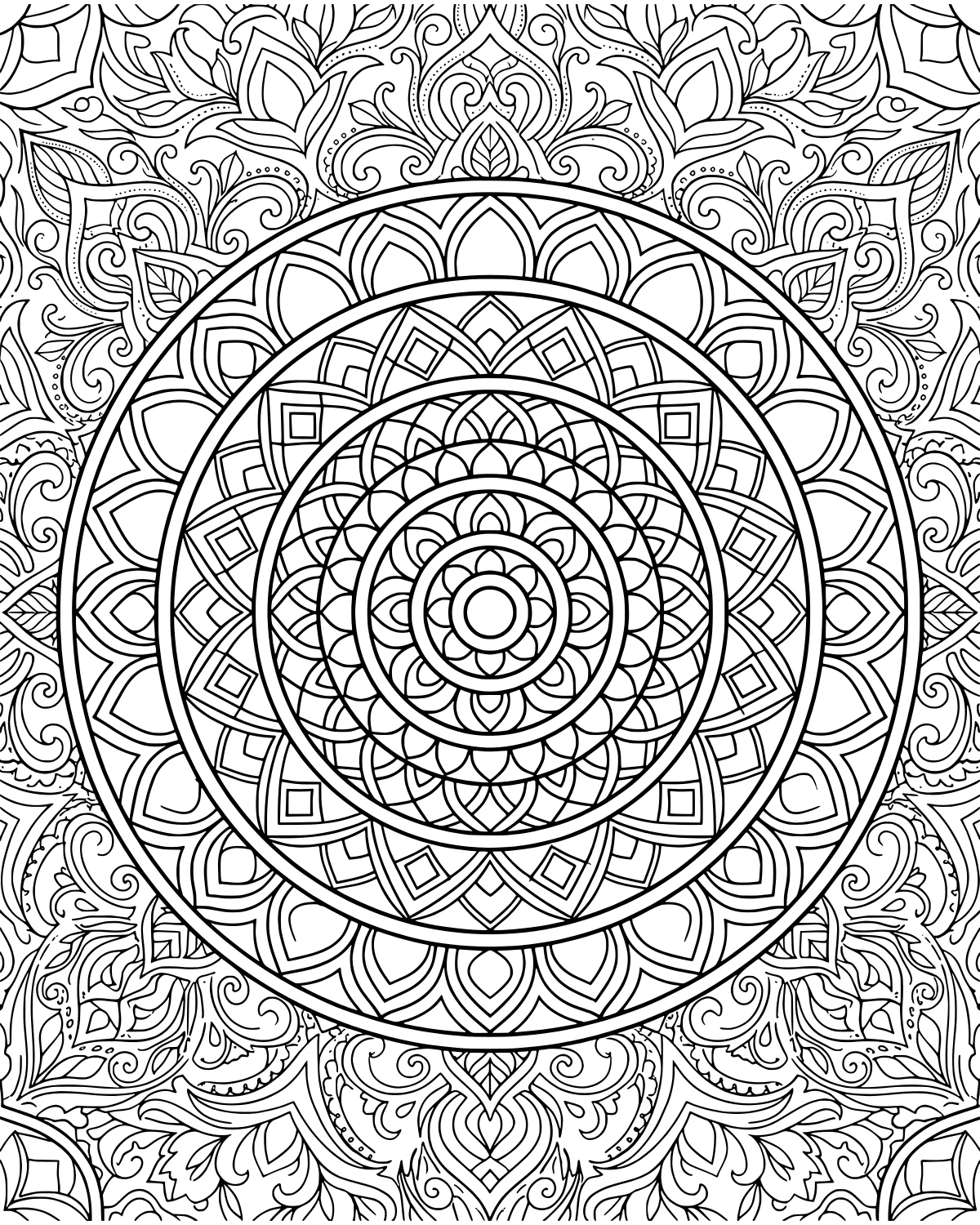
This symmetrical mandala offers a peaceful way to spend an afternoon focusing on fine details. At the very heart of the design, a central circular motif acts as the anchor for the entire piece. As you move your eyes outward, you will discover layers of petal-like shapes and swirling floral elements that create a sense of natural growth. This specific design balances sharp geometric patterns with soft, organic curves, making it an engaging project for anyone who enjoys complex art. It is a wonderful choice for practicing patience and finding a quiet moment of calm.
Color Palette Ideas
What's In This Picture
Starting in the middle, you will find a small, intricate star-like shape surrounded by several concentric rings. Each ring introduces a new layer of complexity, featuring tiny dot patterns and sharp triangles that contrast with the softer leaf motifs found further out. The middle sections are filled with swirling floral elements that look like vines twisting around the circle. As you reach the outermost ring of the mandala, the patterns become larger and more bold, providing a strong border for the entire composition. Every section is perfectly balanced, with symmetrical designs mirrored on every side to create a harmonious and satisfying visual experience.
Coloring Tips
Because this page has a very dense line density, using tools with fine points is highly recommended. Fine-tip markers, gel pens, or very sharp colored pencils will help you stay within the small borders of the geometric patterns. You might try a gradient effect, starting with dark shades in the central circular motif and gradually using lighter tones as you work toward the edges. Another approach is to use a limited color palette of just three or four colors to keep the symmetrical designs looking clean and professional. Since the complexity score is high, take your time and color one ring at a time to avoid feeling overwhelmed by the many details.
Did You Know?
The word mandala comes from the ancient Sanskrit language and literally translates to circle. While they look like beautiful art, they have been used for centuries in many different cultures as tools for focus and meditation. Many people find that the repetitive motion of coloring these shapes helps them feel more relaxed and grounded.
Try This!
After you finish coloring, this piece makes a stunning piece of wall art when placed in a square frame. You can also use the process of coloring as a timed breathing exercise, focusing on your breath as you fill in each of the petal-like shapes. Sharing the finished page with a friend can also be a great way to show off your attention to detail.
Frequently Asked Questions
What are the best coloring tools for such a detailed mandala?
Is there a specific way I should start coloring this design?
Can I use watercolor paints on this mandala?
Popular Collections

Animal Coloring Pages
Animals bring a special kind of life to any art project. Whether you love the quiet of a deep forest...
Spring Coloring Pages
As the frost melts away and the first green shoots poke through the soil, we welcome the vibrant ene...
Cute Coloring Pages
Finding something charming and sweet to color is one of the quickest ways to brighten a rainy aftern...


Kawaii Coloring Pages
Kawaii is more than just a word for cute; it is a whole aesthetic that celebrates the joy in the sma...
You Might Also Like
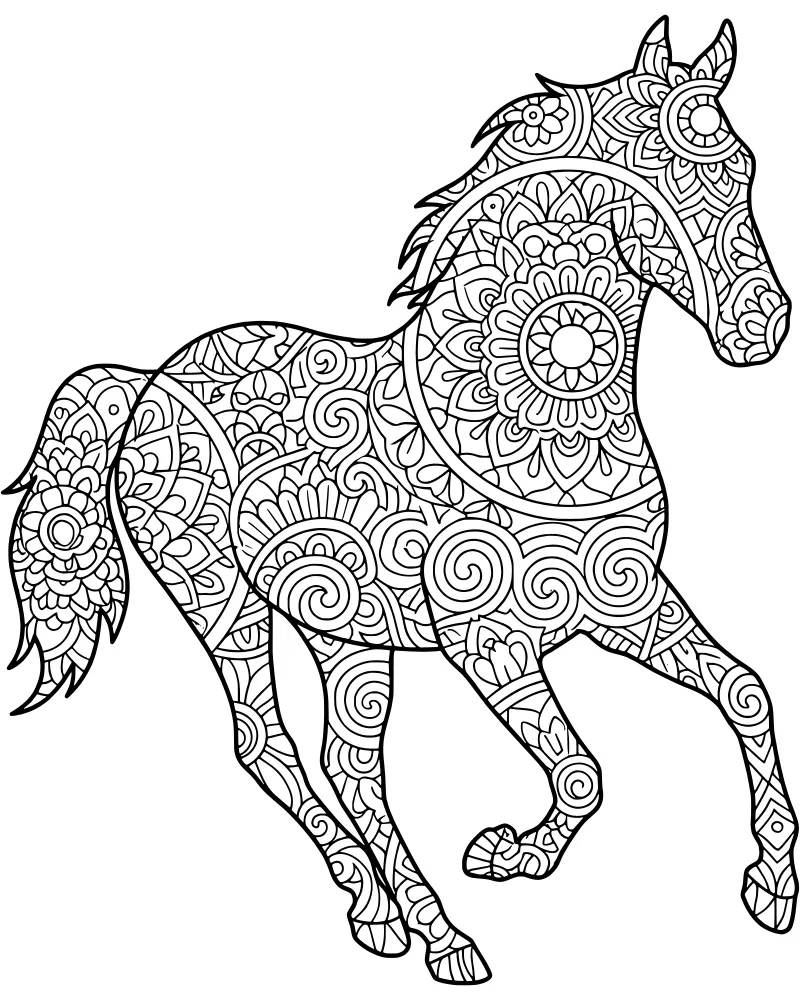
Intricate Mandala Galloping Horse
Mandalas & Patterns
Intricate Interlocking Circles Mandala
Mandalas & Patterns
Ornate Heart Padlock and Antique Key
Mandalas & Patterns
Celestial Hearts and Night Sky
Mandalas & Patterns
Intricate Butterfly Mandala Design
Mandalas & Patterns
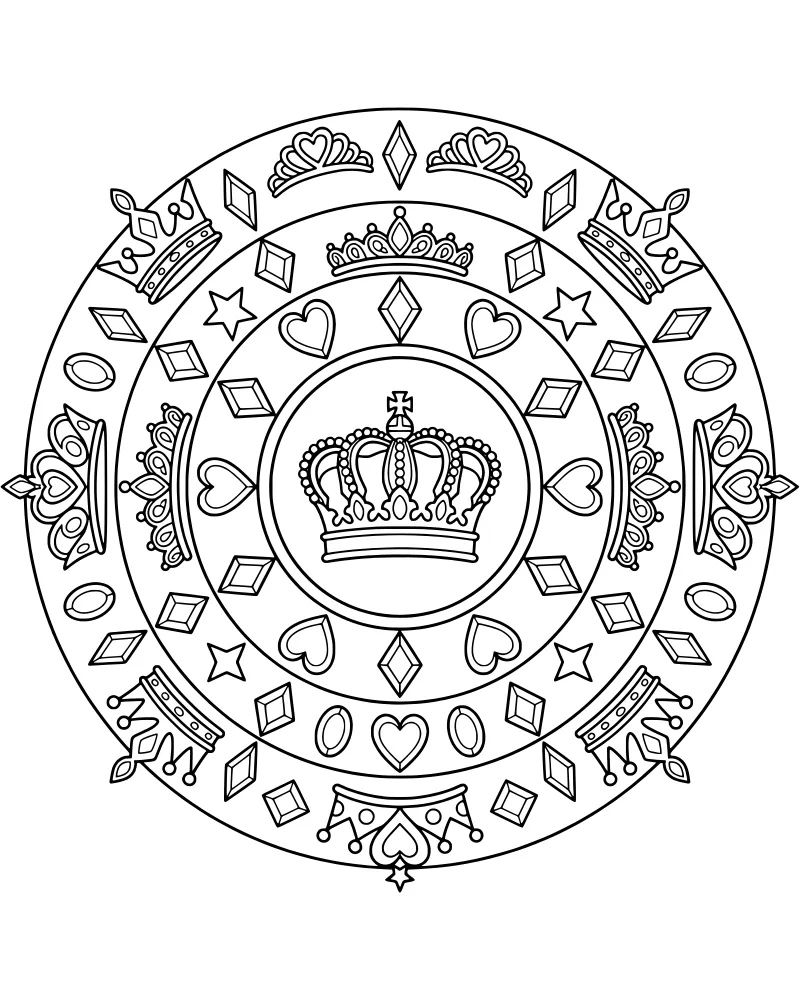
Regal Crowns and Jewels Mandala
Mandalas & Patterns
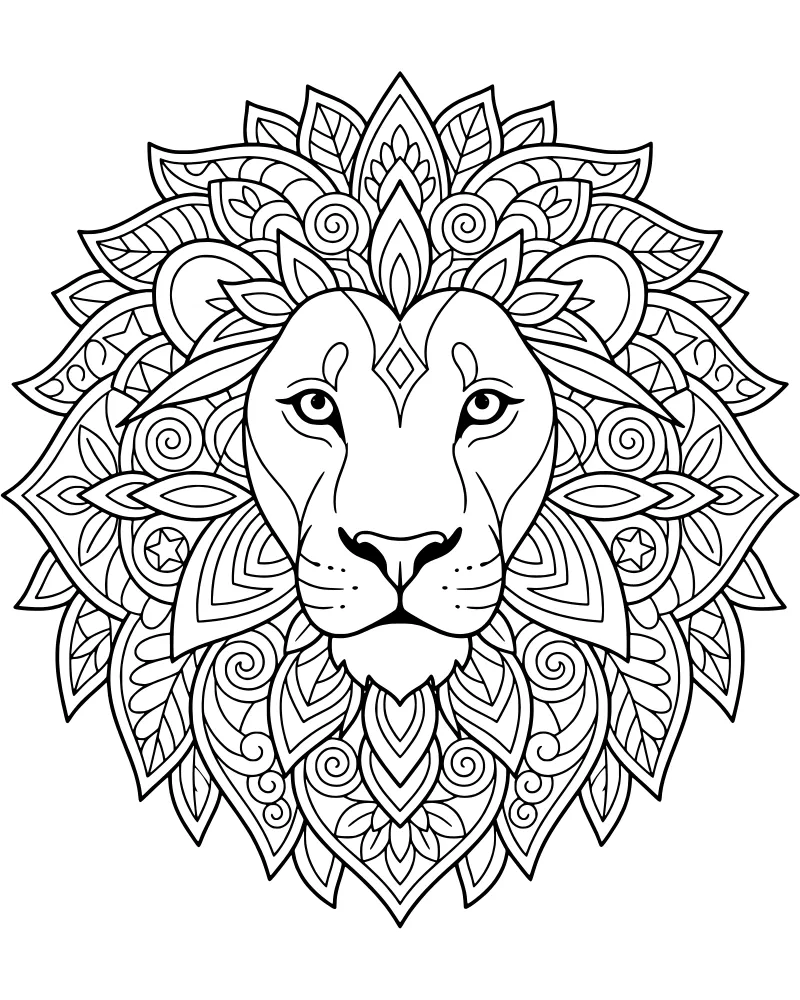
Majestic Mandala Lion Face
Mandalas & Patterns
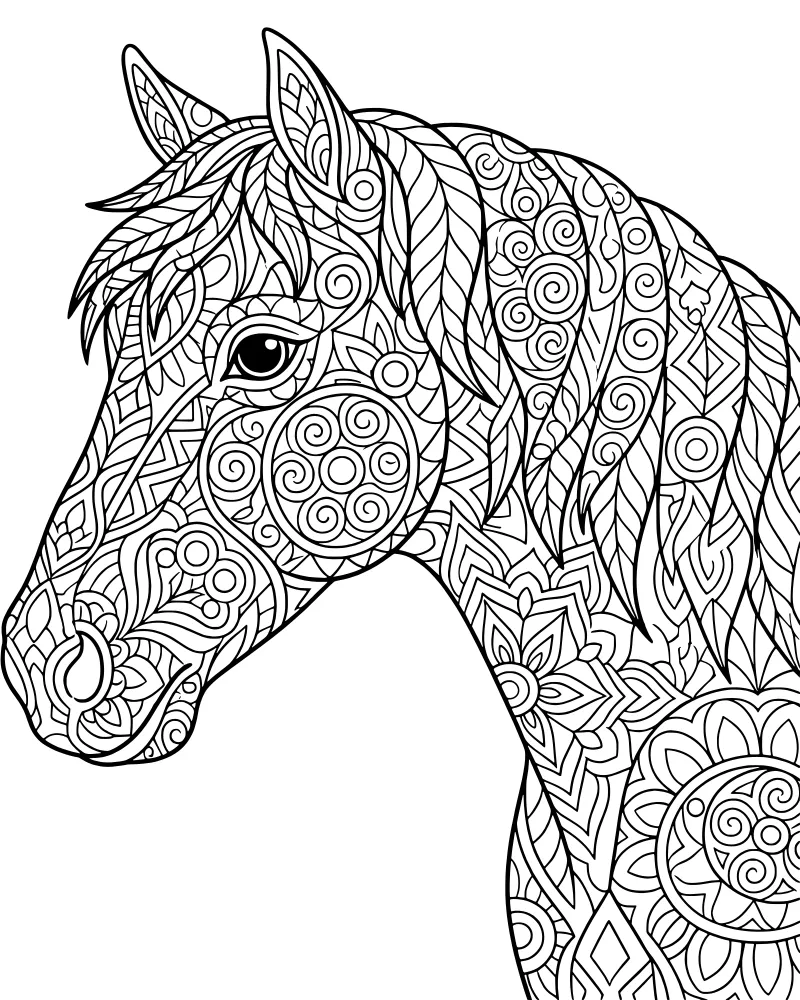
Intricate Ornamental Horse Portrait
Mandalas & Patterns