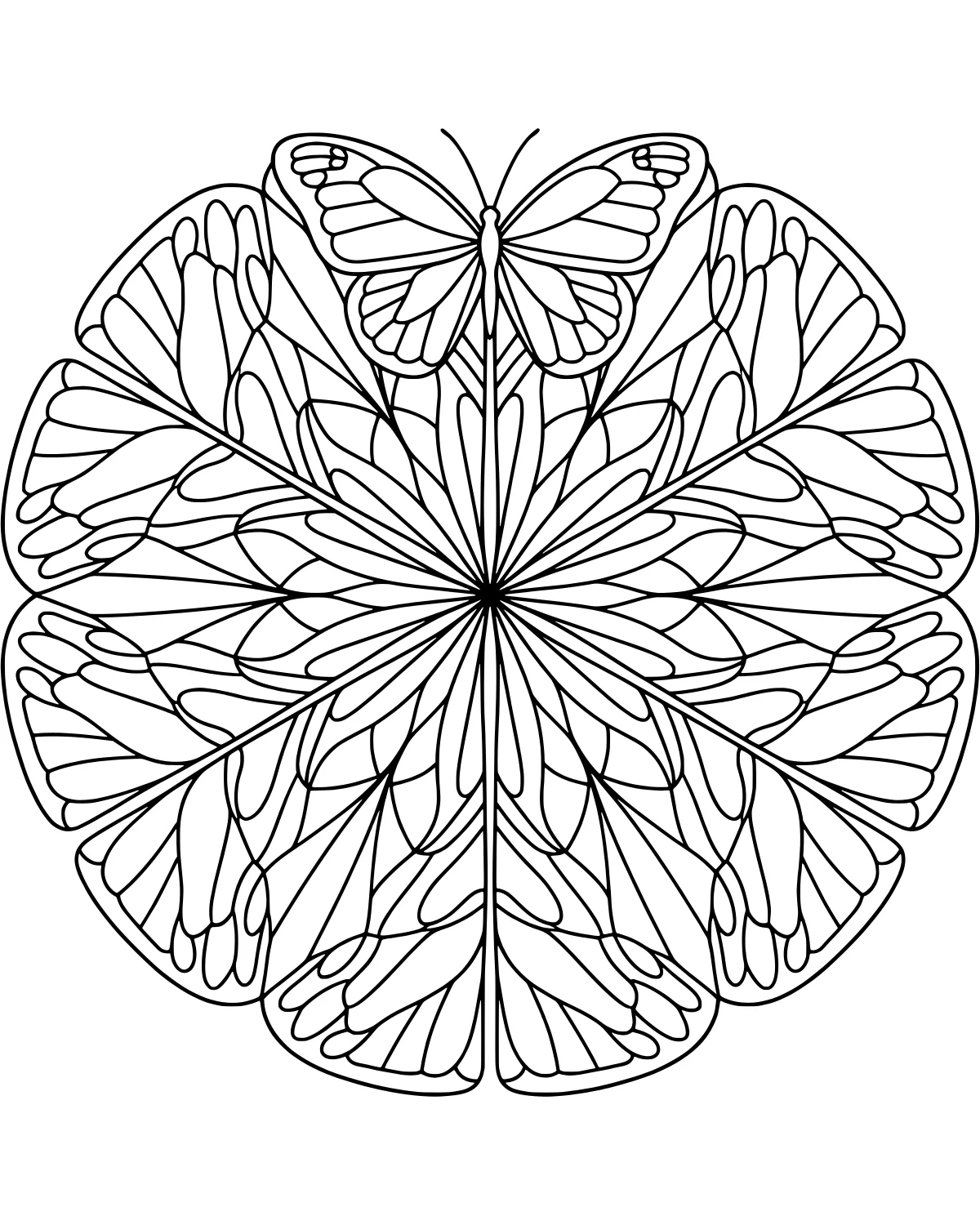
This page features a stunning butterfly resting peacefully atop an intricate mandala. The combination of organic insect wings and structured geometric patterns creates a sense of balance and calm. It is a perfect choice for anyone who enjoys the beauty of nature paired with the focus required for detailed pattern work. The central butterfly acts as the heart of the design, drawing your eye toward its delicate features.
As you work through the layers of this scene, you will find a mix of natural shapes and mathematical precision. This balance makes the artwork both challenging and rewarding to complete. It provides a wonderful way to spend a quiet afternoon focusing on a single, beautiful subject.
Color Palette Ideas
What's In This Picture
At the center of the page, you will find a large butterfly with its wings spread wide to show off elaborate markings. It sits directly on a circular mandala made of repeating petal-like shapes that radiate outward from the middle. Around the edges, you can spot various geometric patterns like circles and triangles that frame the insect. Every layer of the mandala adds more detail, from the tiny dots in the center to the larger sweeping curves on the outer rings.
The wings of the butterfly are divided into several sections, allowing you to use many different colors on a single insect. The background mandala is perfectly symmetrical, meaning the left side matches the right side exactly. This symmetry helps create a harmonious image that feels very organized and peaceful to look at while you work.
Coloring Tips
Since the butterfly is the main focal point, you might want to use vibrant, contrasting colors for its wings to make them stand out against the background. Using fine-tipped markers or sharpened colored pencils will help you stay within the small geometric patterns of the mandala. You could try a gradient effect, starting with dark shades in the center of the mandala and moving toward lighter tints on the outer edges. This creates a glowing effect that highlights the symmetry of the design.
Consider using a specific color family for the mandala, such as cool blues and greens, while using warm oranges and yellows for the butterfly. This color theory technique ensures the insect does not get lost in the busy pattern. If you want to add some extra flair, you can use a metallic gel pen for the very small dots and lines to give the finished piece a bit of sparkle.
Did You Know?
Did you know that butterflies taste with their feet? They have special sensors that tell them if a leaf is a good place to lay eggs just by standing on it. Mandalas are also very special because the word actually means circle in an ancient language called Sanskrit, representing the idea that everything in life is connected.
Try This!
After finishing your masterpiece, you could try to draw your own smaller butterflies in the corners of the paper to expand the scene. You might also want to look for real butterflies in a nearby garden and see if you can match your coloring choices to the colors of a real Monarch or Swallowtail butterfly.
Frequently Asked Questions
What tools are best for these small geometric patterns?
Should I color the butterfly or the mandala first?
Can I use watercolor paints on this page?
Popular Collections
Animal Coloring Pages
Animals bring a special kind of life to any art project. Whether you love the quiet of a deep forest...
Spring Coloring Pages
As the frost melts away and the first green shoots poke through the soil, we welcome the vibrant ene...
Cute Coloring Pages
Finding something charming and sweet to color is one of the quickest ways to brighten a rainy aftern...


Kawaii Coloring Pages
Kawaii is more than just a word for cute; it is a whole aesthetic that celebrates the joy in the sma...
You Might Also Like

Ornate Heart Padlock and Antique Key
Mandalas & Patterns
Regal Crowns and Jewels Mandala
Mandalas & Patterns
Majestic Mandala Lion Face
Mandalas & Patterns
Intricate Ornamental Horse Portrait
Mandalas & Patterns
Intricate Sunflower and Honeybee Nature Mandala
Mandalas & Patterns
Tropical Ocean Mandala with Sun and Starfish
Mandalas & Patterns
Intricate Geometric Petal Mandala
Mandalas & Patterns
Intricate Geometric Crystal Mandala
Mandalas & Patterns