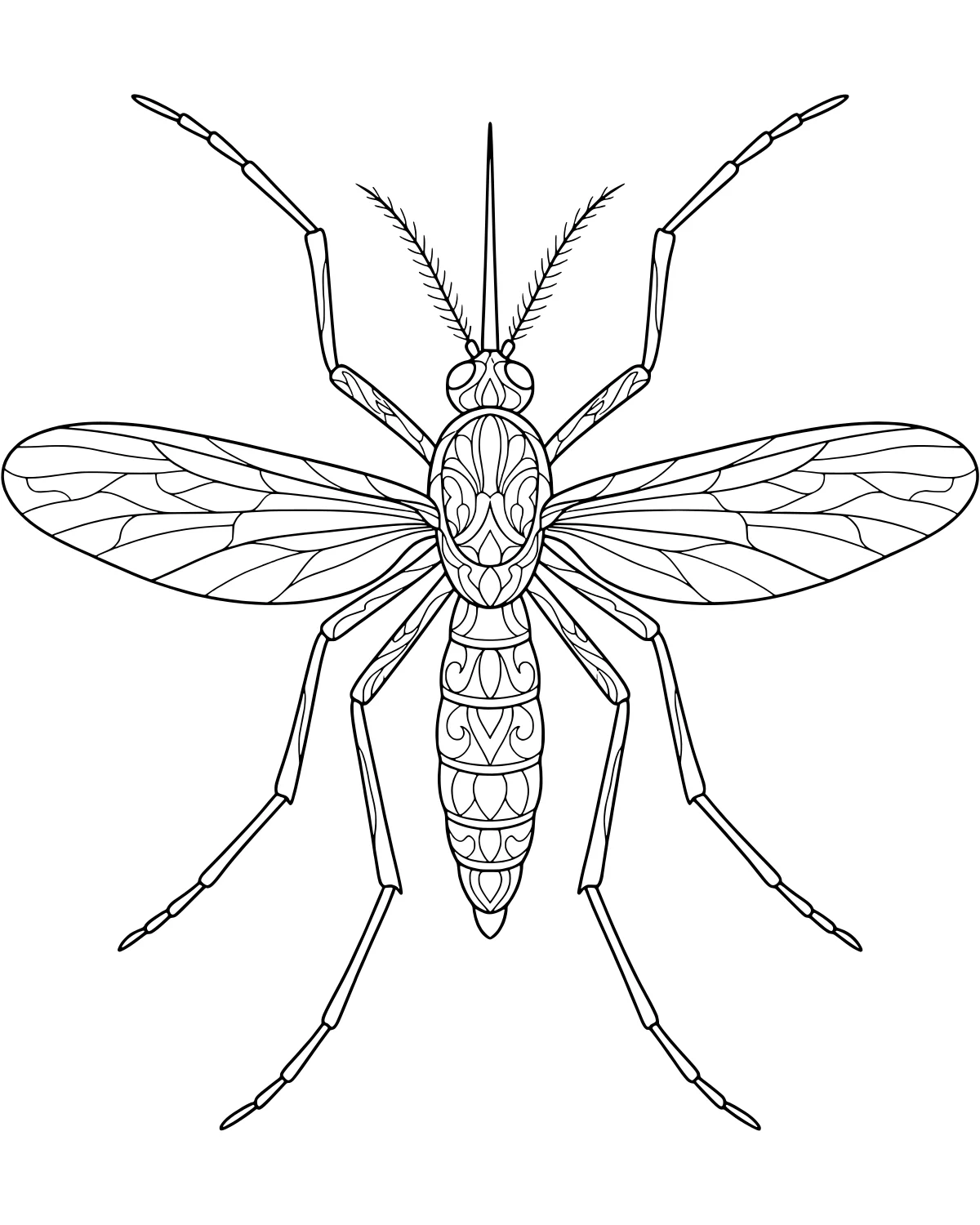
Explore the fascinating world of insects with this detailed mosquito illustration. This top-down view allows for a clear look at the intricate structures that make these tiny creatures so unique. You can focus on the delicate patterns of the wings and the long, slender legs that help them navigate their surroundings.
Whether you enjoy realistic nature studies or just want to practice your fine motor skills, this page offers a great opportunity to learn about bug anatomy. This mosquito is waiting for a splash of color to bring its segmented body and transparent wings to life.
Color Palette Ideas
What's In This Picture
This page features a single mosquito centered in a top-down perspective. Starting at the top, you will find the head with large compound eyes and thin, feathery antennae. Extending from the head is the long proboscis, which the insect uses for feeding.
Moving down, the thorax connects to two large, transparent wings that show fine vein patterns. The long, jointed legs extend outward from the body, showing the characteristic six-legged structure of an insect. Finally, the elongated abdomen at the bottom is divided into several segments, providing plenty of small areas to fill with different shades and textures. Each part of the insect is clearly defined, making it easier to focus on one section at a time.
Coloring Tips
To make this mosquito look realistic, try using a mix of earth tones. You might choose shades of brown, grey, or even deep greens for the body and legs. For the wings, a very light blue or a pale grey can give them a translucent appearance.
Since the wings have many small veins, using a sharp colored pencil or a fine-tip marker will help you stay within the lines. If you want to add a bit of flair, you can use a metallic gel pen for the eyes to give them a shimmery, multi-faceted look. Don't be afraid to experiment with patterns on the abdomen, like small stripes or spots, to make your insect stand out against the plain background.
Did You Know?
Did you know that only female mosquitoes bite? They need the protein from blood to help them lay their eggs. Male mosquitoes actually prefer to eat flower nectar, just like butterflies! Also, mosquitoes are considered the deadliest animals on Earth because they can carry diseases, but they also serve as an important food source for birds, bats, and frogs.
Try This!
After you finish coloring your mosquito, you could try to draw a small pond or a garden around it to show where it might live. You might also use a magnifying glass to look at real bugs in your backyard to see if their wings look like the ones on this page. It is a fun way to practice being a young scientist while you create your art.
Frequently Asked Questions
What colors should I use for the mosquito's wings?
Is this coloring page difficult for younger children?
Why does the mosquito have so many legs?
Popular Collections

Animal Coloring Pages
Animals bring a special kind of life to any art project. Whether you love the quiet of a deep forest...
Spring Coloring Pages
As the frost melts away and the first green shoots poke through the soil, we welcome the vibrant ene...

Cute Coloring Pages
Finding something charming and sweet to color is one of the quickest ways to brighten a rainy aftern...



Kawaii Coloring Pages
Kawaii is more than just a word for cute; it is a whole aesthetic that celebrates the joy in the sma...
You Might Also Like
May Magic Spring Garden
Bugs & Insects
Happy Caterpillar on a Sunny Leaf
Bugs & Insects
Butterfly and Ladybug Garden Picnic
Bugs & Insects
Happy Mantis in a Summer Garden
Bugs & Insects
Ladybug Resting on a Forest Mushroom
Bugs & Insects
Happy Ladybug in a Sunny Garden
Bugs & Insects
Happy Grasshopper in a Flower Garden
Bugs & Insects
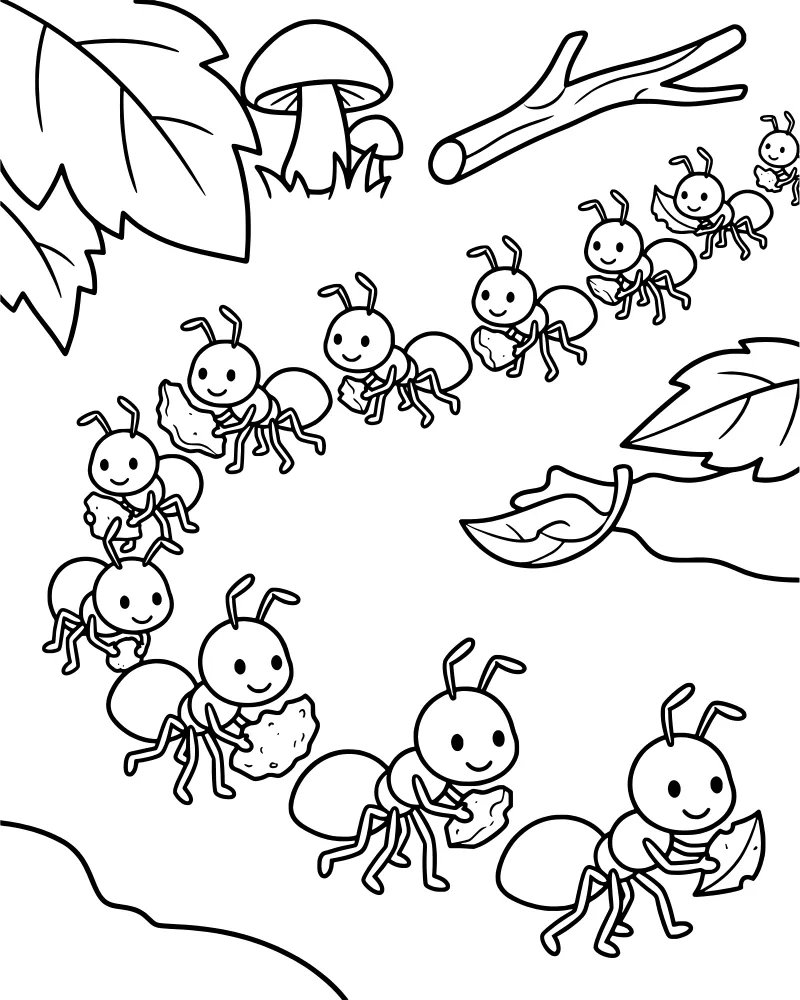
Busy Ants Carrying Food Through the Forest
Bugs & Insects