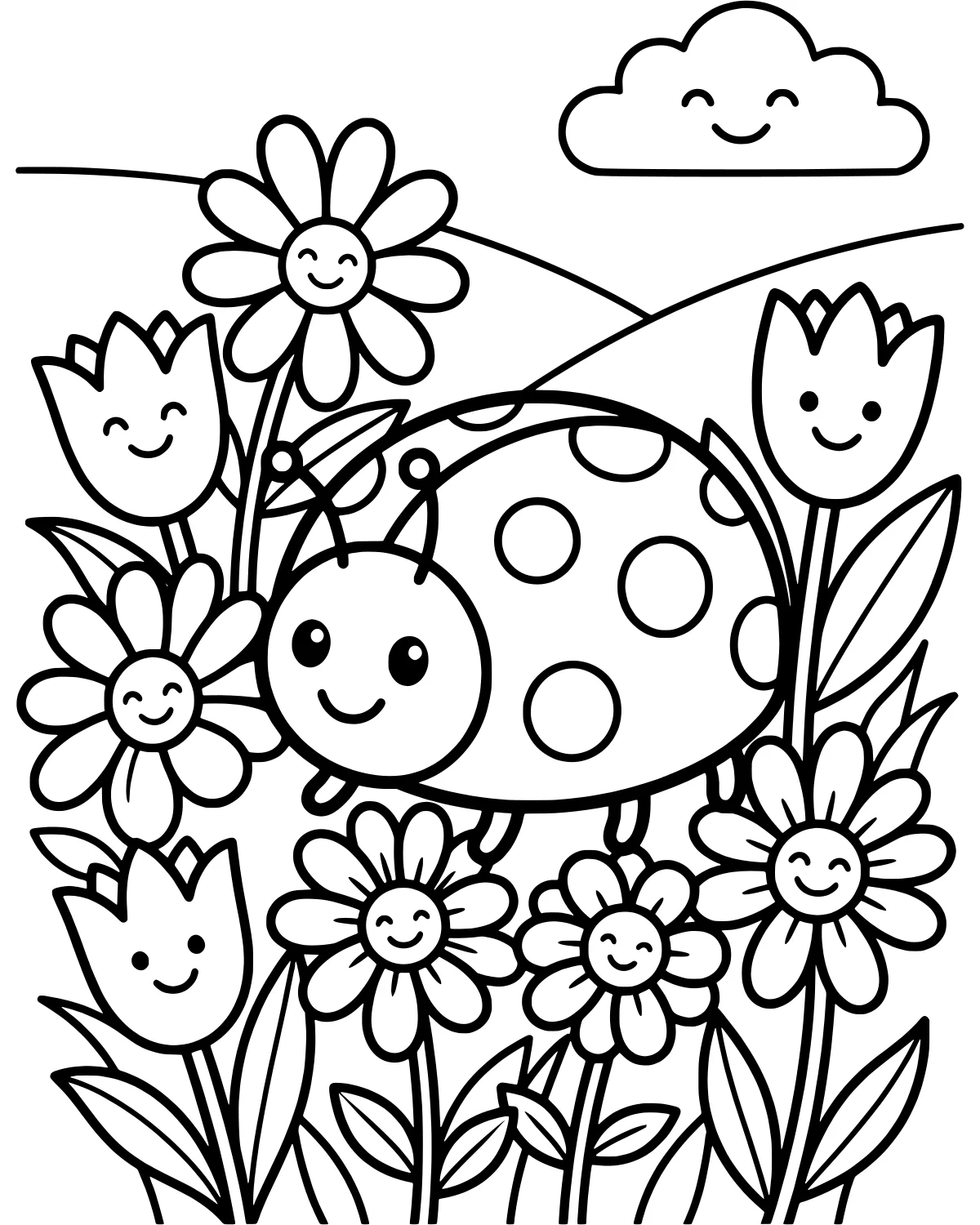
This charming scene captures a friendly ladybug exploring a vibrant garden. It is a wonderful way to spend a quiet afternoon bringing life to the daisy flowers and tulip flowers that fill the landscape. The atmosphere is light and happy, perfect for anyone who loves the tiny wonders of nature.
This illustration provides a great opportunity to practice staying inside the lines while exploring different floral shapes. The balance of simple shapes and detailed plants makes it a rewarding project for young artists.
Color Palette Ideas
What's In This Picture
In the center of the image, a ladybug with distinct ladybug spots sits near a variety of plants. You will find several daisy flowers with round centers and tulip flowers with tall stems. Surrounding these blooms are lush leaves reaching toward the sky.
In the background, gentle hills roll across the horizon under a friendly cloud that has a big smile. The moderate line density makes it easy to distinguish between the different floral elements and the landscape. Every part of the scene, from the tiny spots to the broad hills, offers a distinct area to explore with your favorite shades.
Coloring Tips
For the ladybug, a bright classic red works beautifully, but you might also try a sunny orange or a deep pink. The tulip petals can be shaded with a light gradient of two colors, like yellow and orange, to give them a realistic look. Use different shades of green for the stems and leaves to create depth against the rolling hills.
The smiling cloud looks great with a very light blue or even a soft lavender shadow to make it pop against the white space. If you want to add a special touch, use a glitter pen for the ladybug spots or the flower centers to make them sparkle.
Did You Know?
Did you know that a ladybug can eat up to 5,000 insects in its lifetime? Most ladybugs have red bodies with black spots, which helps warn birds that they do not taste very good. They are a gardener's best friend because they help keep plants healthy by eating tiny pests.
Try This!
After finishing the picture, you can count all the spots on the ladybug or try to find a real ladybug in your backyard. You could also draw more tiny insects like bees or butterflies in the empty spaces around the hills. Another fun idea is to write a short story about where the ladybug is traveling.
Frequently Asked Questions
What colors should I use for the ladybug?
How can I make the flowers look more realistic?
Is this page suitable for toddlers?
Popular Collections


Animal Coloring Pages
Animals bring a special kind of life to any art project. Whether you love the quiet of a deep forest...

Cute Coloring Pages
Finding something charming and sweet to color is one of the quickest ways to brighten a rainy aftern...



Kawaii Coloring Pages
Kawaii is more than just a word for cute; it is a whole aesthetic that celebrates the joy in the sma...


Funny Coloring Pages
Laughter is a wonderful part of childhood, and our collection of Funny Coloring Pages is designed to...
You Might Also Like
May Magic Spring Garden
Bugs & Insects
Happy Caterpillar on a Sunny Leaf
Bugs & Insects
Butterfly and Ladybug Garden Picnic
Bugs & Insects
Happy Mantis in a Summer Garden
Bugs & Insects
Ladybug Resting on a Forest Mushroom
Bugs & Insects
Happy Grasshopper in a Flower Garden
Bugs & Insects
Busy Ants Carrying Food Through the Forest
Bugs & Insects
Detailed Mosquito Anatomy
Bugs & Insects