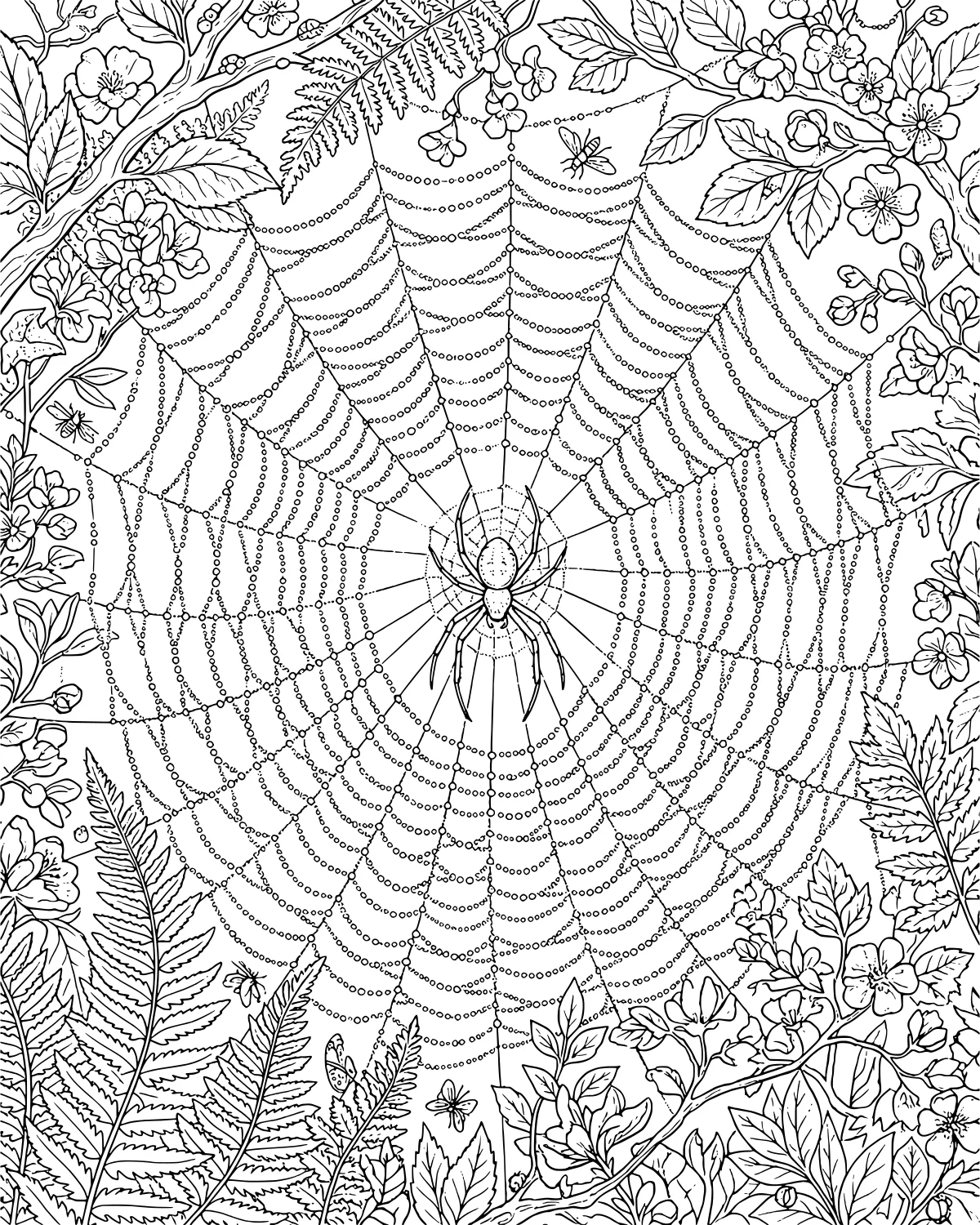
This intricate spiderweb captures a quiet, frozen moment in a hidden garden. A patient spider waits at the center of its complex masterpiece, which is covered in hundreds of tiny, shimmering dewdrops. Surrounding the web is a lush environment filled with ferns, blooming flowers, and delicate buds. It is a beautiful snapshot of the natural world that encourages you to slow down and notice the small details often missed during a busy day. Coloring this scene provides a peaceful way to explore the connections between plants and insects in the wild.
Color Palette Ideas
What's In This Picture
At the heart of the page, a large spiderweb stretches across the frame, anchored firmly to sturdy branches. Every strand of the web is dotted with round dewdrops that look like tiny pearls. A small spider sits near the middle, keeping a watchful eye over its home. Tucked behind and around the web are feathered ferns and broad leaves that create a sense of depth in the forest floor. You will find several flowers in various stages of growth, from tight buds to fully open petals. Among the greenery, a few busy bees and graceful butterflies flutter about, adding a sense of life and movement to this quiet outdoor sanctuary.
Coloring Tips
Because of the high line density and small details, using fine-tipped markers or very well-sharpened colored pencils is the best approach for this page. You can make the spiderweb stand out by using a very light silver or pale blue, leaving the centers of the dewdrops white to mimic a bright reflection. For the ferns and leaves, try using several different shades of green to show the variety in the foliage. The flowers and butterflies offer a great chance to use vibrant colors like magenta, orange, or deep yellow to contrast with the cooler tones of the web and greenery. Shading the areas where the leaves overlap will give the garden a three-dimensional look.
Did You Know?
Did you know that some spiders recycle their webs? Many species eat their old silk every night to get back the protein they used to build it. They then use that extra energy to spin a brand-new web for the next day. This keeps the web strong and sticky for catching food.
Try This!
After you finish coloring the scene, try to count all the tiny dewdrops scattered across the web strands. You can also look closely at the different insects and try to identify which ones are bees and which ones are butterflies based on their wing shapes and antennae.
Frequently Asked Questions
What is the best way to color the tiny dewdrops?
Is this page good for gel pens?
How can I make the spider stand out?
Popular Collections

Animal Coloring Pages
Animals bring a special kind of life to any art project. Whether you love the quiet of a deep forest...
Cute Coloring Pages
Finding something charming and sweet to color is one of the quickest ways to brighten a rainy aftern...


Kawaii Coloring Pages
Kawaii is more than just a word for cute; it is a whole aesthetic that celebrates the joy in the sma...


Funny Coloring Pages
Laughter is a wonderful part of childhood, and our collection of Funny Coloring Pages is designed to...
You Might Also Like

Cozy Winter Cabin in Snowy Mountains
Nature & Outdoors
Family Camping Adventure in the Forest
Nature & Outdoors
Sunlit Garden Greenhouse Sanctuary
Nature & Outdoors
Spring Garden Watering Can and Flowers
Nature & Outdoors
Young Girl Gardening Near Royal Castle
Nature & Outdoors
Elegant Blooming Chrysanthemum and Leaves
Nature & Outdoors
Majestic King Protea Bloom
Nature & Outdoors
Forest Bridge with Woodland Friends
Nature & Outdoors