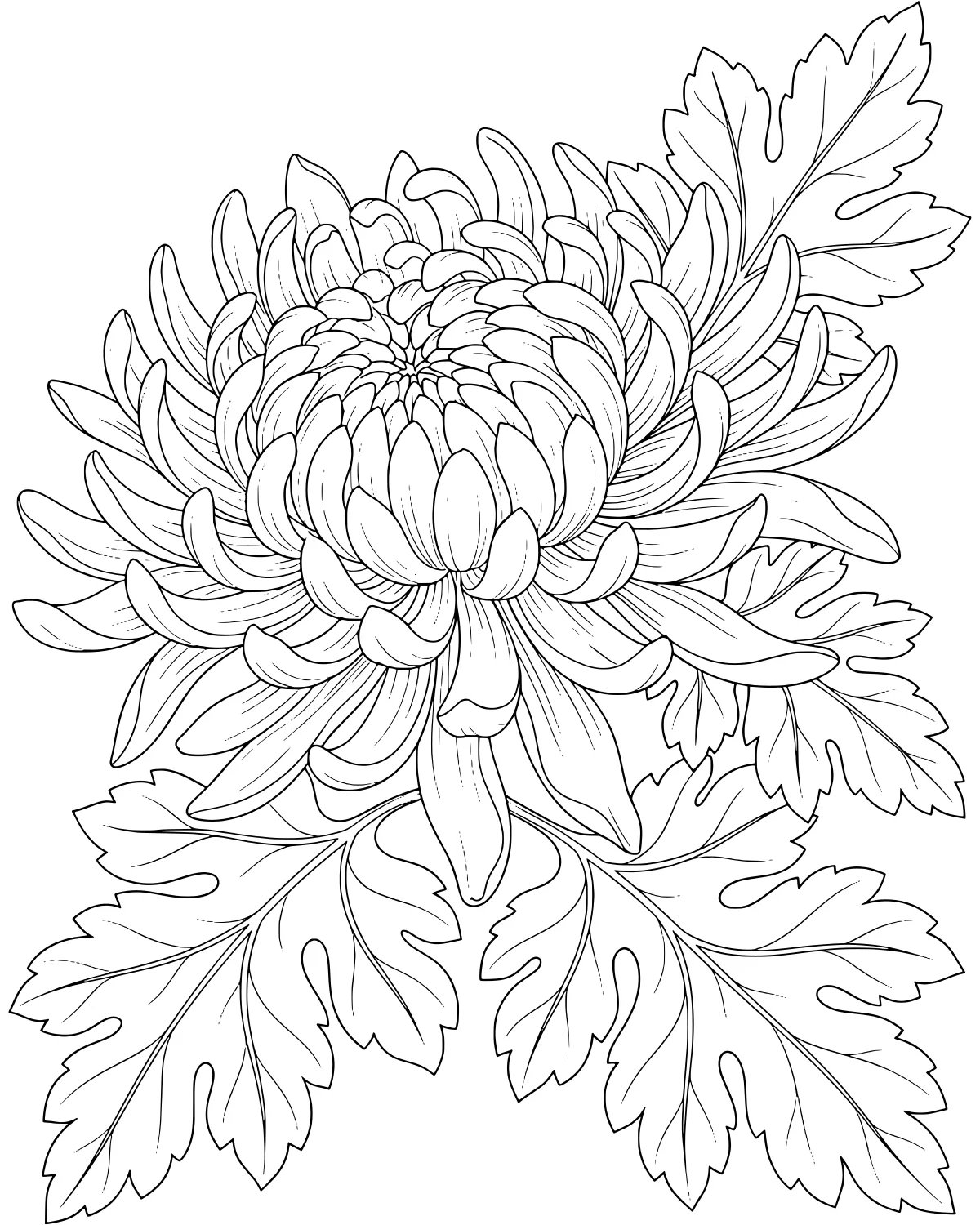
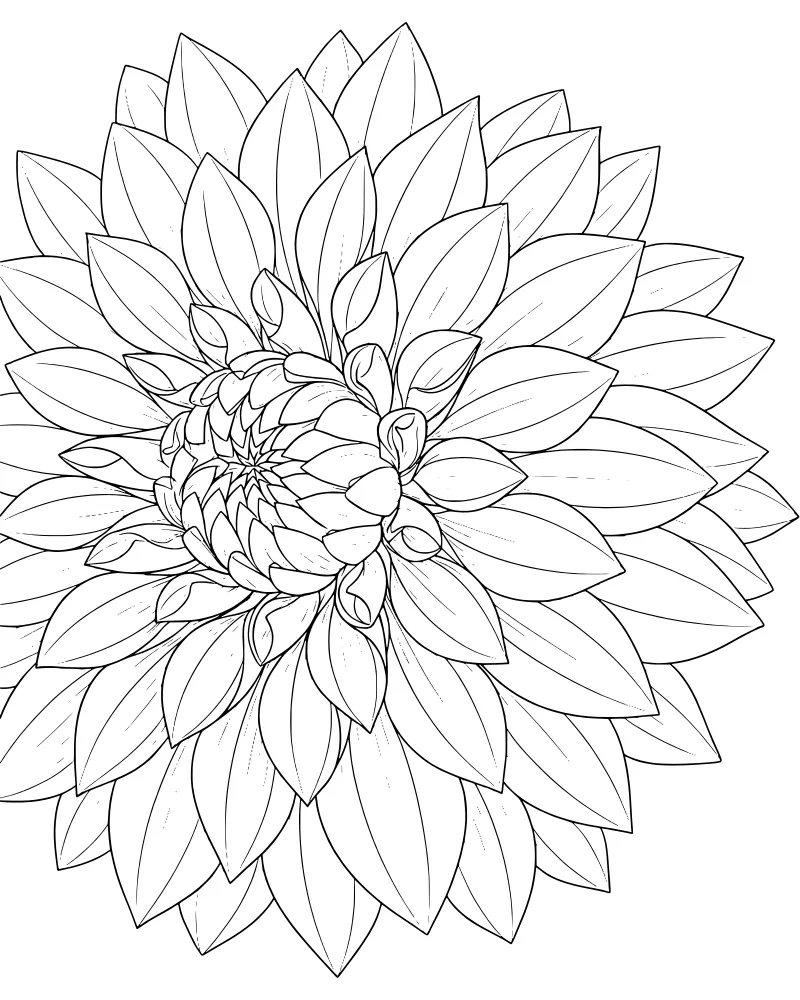
This chrysanthemum flower offers a peaceful moment for anyone who loves the intricate beauty of nature. The dense layers of petals create a sense of depth and elegance that makes this page a joy to complete. This botanical scene provides the perfect canvas for practicing color blending and fine motor skills. As you focus on the central bloom, you can appreciate the natural symmetry found in garden flowers. It is a wonderful way to spend a quiet afternoon focusing on the small details that make the natural world so special.
Color Palette Ideas
What's In This Picture
Looking closely at the page, you will find the center of the chrysanthemum where the smallest petals begin to unfurl in a tight cluster. Moving outward, the outermost petals stretch toward the edges of the frame, showing off their unique curves and elegant shapes. Below the large bloom, several leaves are visible, featuring detailed leaf veins that add a realistic texture to the botanical composition. Each leaf is positioned to balance the heavy floral top, creating a harmonious and natural scene. The density of the lines throughout the flower provides many opportunities to play with different color values and highlights.
Coloring Tips
Because of the dense line work, using fine-tipped markers or sharpened colored pencils is a great choice for reaching the small spaces near the center. You might try using a gradient effect, starting with a dark shade in the middle and slowly transitioning to a lighter hue on the tips of the petals to create a glowing effect. For the leaves, consider using multiple shades of green to highlight the veins and create a more natural, three-dimensional look. If you want a more artistic feel, try using contrasting colors for the background to make the flower stand out even more.
Did You Know?
Chrysanthemums are often called mums and they represent different things around the world. In many Asian cultures, they symbolize longevity and rebirth because of their hardiness. They are also the official birth flower for the month of November and come in almost every color except blue. These flowers are actually part of the daisy family.
Try This!
After finishing your masterpiece, you could try to identify different types of real flowers in your local park or garden. You might also use this page as a template to practice drawing your own petals and leaf patterns on a separate piece of paper to build your artistic skills.
Frequently Asked Questions
What colors should I use for a chrysanthemum?
How do I color the tiny petals in the center?
Is this page suitable for beginners?
Popular Collections


Animal Coloring Pages
Animals bring a special kind of life to any art project. Whether you love the quiet of a deep forest...
Cute Coloring Pages
Finding something charming and sweet to color is one of the quickest ways to brighten a rainy aftern...


Kawaii Coloring Pages
Kawaii is more than just a word for cute; it is a whole aesthetic that celebrates the joy in the sma...


Funny Coloring Pages
Laughter is a wonderful part of childhood, and our collection of Funny Coloring Pages is designed to...
You Might Also Like

Cozy Winter Cabin in Snowy Mountains
Nature & Outdoors
Family Camping Adventure in the Forest
Nature & Outdoors
Sunlit Garden Greenhouse Sanctuary
Nature & Outdoors
Spring Garden Watering Can and Flowers
Nature & Outdoors
Young Girl Gardening Near Royal Castle
Nature & Outdoors
Forest Bridge with Woodland Friends
Nature & Outdoors
Majestic King Protea Bloom
Nature & Outdoors
Intricate Dahlia Flower Close Up
Nature & Outdoors