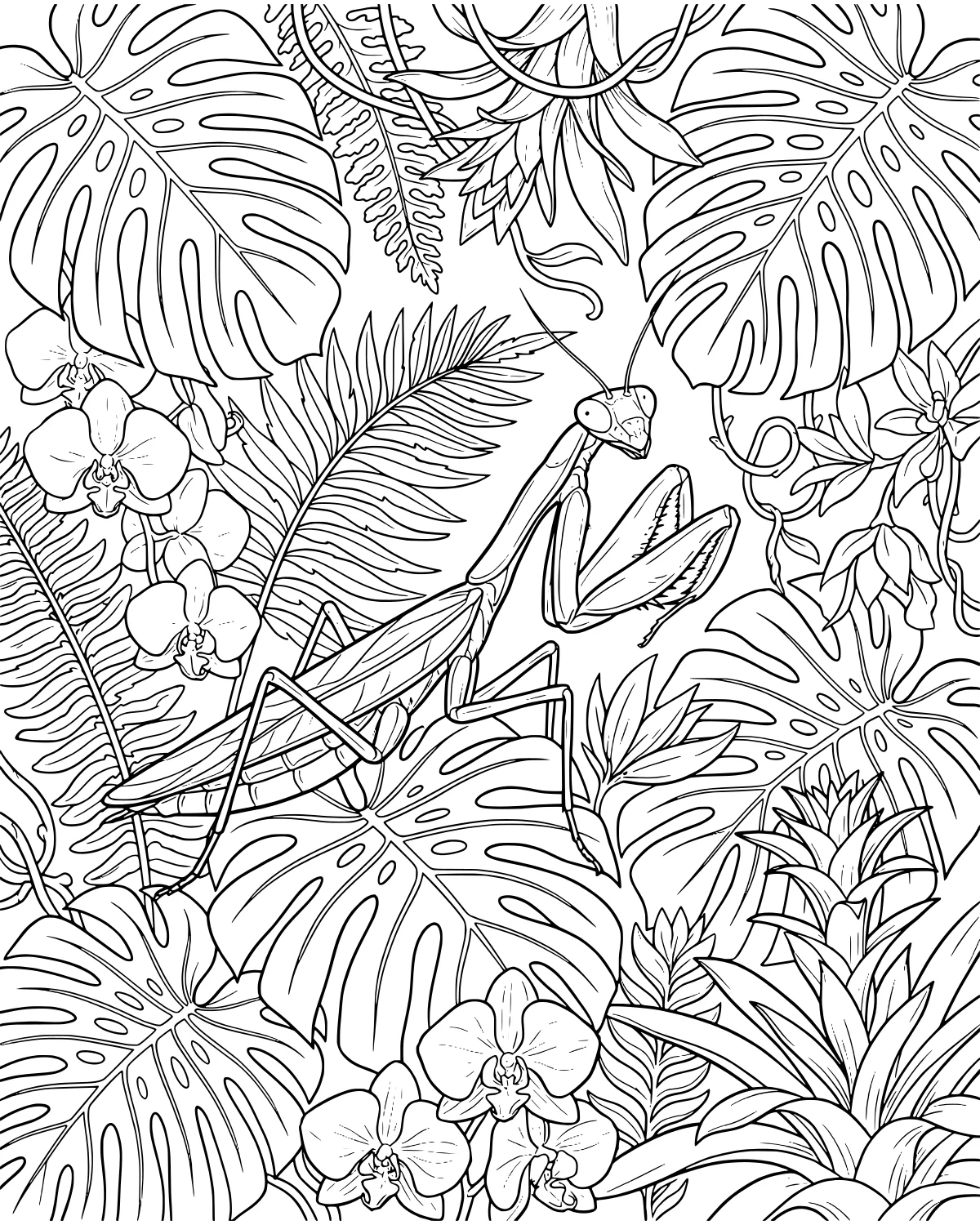
A tiny hunter waits patiently among the shadows of a vibrant tropical garden. This scene features a praying mantis perfectly camouflaged against a backdrop of thick monstera leaves and delicate orchids. It captures a quiet moment in the wild where nature feels both still and full of life. You can almost hear the rustle of the ferns as you prepare to bring this intricate jungle world to life with your favorite colors. This page is perfect for anyone who loves the intersection of biology and botanical beauty.
Color Palette Ideas
What's In This Picture
At the heart of the page, a large praying mantis rests with its front legs folded, showing off its unique triangular head and slender body. Surrounding this fascinating insect is a dense collection of tropical plants. You will find wide monstera leaves with their signature holes, alongside elegant orchids that provide a soft contrast to the sharp lines of the mantis. Tucked into the corners are feathery ferns and winding vines that create a sense of depth and mystery. A sturdy bromeliad sits nestled among the foliage, adding another layer of texture to this complex botanical scene. Every corner is filled with organic shapes and patterns waiting for a splash of color.
Coloring Tips
Because the line work is quite dense, using fine-tipped markers or sharpened colored pencils will help you stay within the small details of the orchids and the mantis's legs. You might try using different shades of green for the monstera leaves and ferns to make each plant stand out from the others. A bright, contrasting color like pink or orange for the bromeliad and flowers will draw the eye toward the center of the page. For a more realistic look, try adding a bit of yellow-green to the mantis so it looks like it is truly blending into its leafy environment. Layering your colors can create a wonderful sense of shadow and light throughout the jungle floor.
Did You Know?
Did you know that a praying mantis is the only insect that can turn its head a full 180 degrees? This helps them spot prey and stay safe from predators without moving their whole bodies. They also have five eyes. Two large ones are easy to see, but three tiny ones are hidden in the middle of their forehead to help them detect light and movement.
Try This!
Once you finish coloring, try to count how many separate monstera leaves you can find hidden in the background. You could also research different types of orchids to see which real-world colors you want to use for the flowers. For an extra challenge, see if you can draw a tiny fly or beetle hiding somewhere in the vines for the mantis to find.
Frequently Asked Questions
What colors should I use for a realistic praying mantis?
Are the flowers in the picture real species?
Is this coloring page difficult?
Popular Collections


Animal Coloring Pages
Animals bring a special kind of life to any art project. Whether you love the quiet of a deep forest...

Spring Coloring Pages
As the frost melts away and the first green shoots poke through the soil, we welcome the vibrant ene...


Cute Coloring Pages
Finding something charming and sweet to color is one of the quickest ways to brighten a rainy aftern...



Kawaii Coloring Pages
Kawaii is more than just a word for cute; it is a whole aesthetic that celebrates the joy in the sma...
You Might Also Like

Geometric Low Poly Butterfly
Bugs & Insects

Ornate Garden Butterfly with Floral Details
Bugs & Insects
Underground Worm Miner Treasure Hunt
Bugs & Insects
Detailed Dragonfly on Grass Blade
Bugs & Insects
Busy Ants at the Forest Ant Hill
Bugs & Insects
Busy Bees in a Summer Garden
Bugs & Insects
Cute Snail Peeking Behind a Mushroom
Bugs & Insects
May Magic Spring Garden
Bugs & Insects