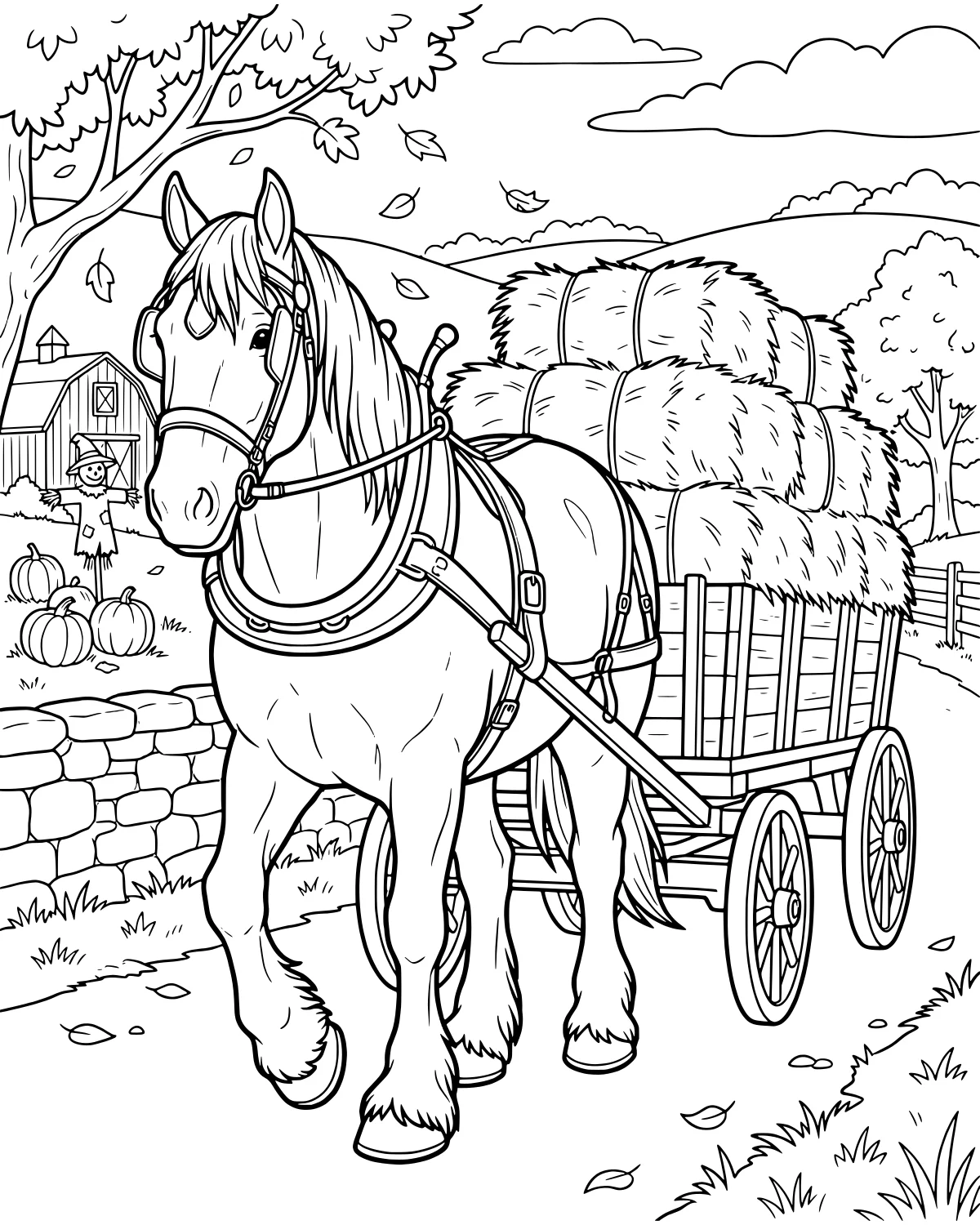
This scene captures the busy and beautiful atmosphere of a farm during the harvest season. A sturdy horse is the star of the show, wearing a detailed harness as it pulls a wooden cart filled with heavy hay bales. It is a crisp day in the countryside, and the farm is full of life and color.
As you look around the farm, you will notice a friendly scarecrow keeping watch over a patch of bright pumpkins. In the distance, a cozy farmhouse sits nestled among rolling hills and scattered autumn leaves. This is a wonderful way to enjoy the changing seasons while exploring a rustic landscape filled with interesting details.
Color Palette Ideas
What's In This Picture
In the center of the page, a large horse is harnessed to a cart piled high with several rectangular hay bales. The horse has a long mane and tail that look great with different textures. Moving toward the bottom of the page, you will find a low stone wall and a few round pumpkins resting in the grass. A small fence runs along the path, leading your eye toward a classic farmhouse in the background.
A tall tree stands to the side, with leaves beginning to fall toward the ground. Near the fence, a scarecrow wearing a floppy hat stands tall among the crops. The background features soft, rolling hills that meet a sky filled with light, fluffy clouds. Every part of this rural setting, from the individual stones in the wall to the tufts of grass, offers a new area to explore with your colors.
Coloring Tips
For the horse, you might try using different shades of brown like chestnut or tan, or even give it white patches for a spotted look. The hay bales look best with various shades of golden yellow and light orange to show their dry texture. Since this is an autumn scene, the pumpkins should be a vibrant orange, while the leaves on the tree and ground can be a mix of deep red, burnt orange, and bright yellow.
To make the background feel far away, try using lighter, softer colors for the rolling hills and the farmhouse. You can add a bit of grey or blue to the clouds to give the sky some depth. If you want to make the scarecrow stand out, give him a colorful plaid shirt or a bright hat that contrasts with the natural tones of the farm. Using colored pencils can help you get into the smaller areas like the harness and the individual blades of grass.
Did You Know?
Did you know that horses have been helping farmers pull heavy loads for thousands of years? A single horse is strong enough to pull a cart that weighs much more than they do. Farmers also use scarecrows to protect their crops because birds like crows are afraid of things that look like humans. It is a very old tradition that still helps farms today.
Try This!
You can turn this page into a counting game by finding all the pumpkins hidden in the grass or counting how many hay bales are stacked in the cart. After you finish coloring the horse, try giving it a name and writing it on the side of the cart. You could also draw a few extra birds flying in the sky or perched on the fence near the scarecrow.
Frequently Asked Questions
What colors should I use for the hay bales?
Is this coloring page good for markers?
What kind of horse is pulling the cart?
Popular Collections
Spring Coloring Pages
As the frost melts away and the first green shoots poke through the soil, we welcome the vibrant ene...
Cute Coloring Pages
Finding something charming and sweet to color is one of the quickest ways to brighten a rainy aftern...


Kawaii Coloring Pages
Kawaii is more than just a word for cute; it is a whole aesthetic that celebrates the joy in the sma...

Funny Coloring Pages
Laughter is a wonderful part of childhood, and our collection of Funny Coloring Pages is designed to...
You Might Also Like
Cozy Winter Cabin in Snowy Mountains
Nature & Outdoors
Family Camping Adventure in the Forest
Nature & Outdoors
Spring Garden Watering Can and Flowers
Nature & Outdoors
Sunlit Garden Greenhouse Sanctuary
Nature & Outdoors
Young Girl Gardening Near Royal Castle
Nature & Outdoors
Forest Bridge with Woodland Friends
Nature & Outdoors
Majestic King Protea Bloom
Nature & Outdoors
Elegant Blooming Chrysanthemum and Leaves
Nature & Outdoors